
Train Travel in India: What Should You Know Before Your First Journey?
Your first train journey in India can feel a little confusing. There are coaches, berths, PNR status, luggage rules and plenty of small things nobody thinks to explain.
The good news is that you don’t need to know everything about Indian Railways to have a comfortable journey.
You simply need to prepare for the practical side of travelling by train. Know what to keep with you, how to read your ticket, what to expect at the station and how to make your berth work for you.
Here are the things I would want to know before taking a first long-distance train journey in India.
1. Check Your Ticket Before You Leave Home
Don’t check your ticket only when you reach the station.
Check it once at home and again before leaving.
Look for:
- Train number and name
- Date of travel
- Boarding station
- Destination
- Departure time
- Coach number
- Berth or seat number
- PNR status
Your PNR status is especially important if your ticket was originally on a waiting list.
Indian Railways lists statuses such as CNF (Confirmed), RAC (Reservation Against Cancellation) and WL (Waiting List). It also notes that the current status can change before the final chart is prepared.
So don’t rely on an old screenshot of your booking.
Check the latest status before you leave.
2. Keep Your ID Easy to Find
If you’re travelling on an e-ticket, don’t put your ID inside your main suitcase.
Keep it somewhere accessible.
IRCTC says that at least one passenger booked on an e-ticket must carry an accepted original photo ID during the journey. Accepted documents include options such as a passport, driving licence, PAN card, voter ID and Aadhaar, among others.
Also, if you are booking online tickets, it should be done from a phone that will be travelling with you. Railways no longer accept screenshots even if the ticket is in your name.
3. Your Berth Choice Can Affect Your Comfort
This is one of the first things that can confuse a new traveller.
Depending on your class and coach, you may see:
- Lower berth
- Middle berth
- Upper berth
- Side lower
- Side upper
There isn’t one berth that is best for everyone.
Lower berth
It’s easy to access and convenient if you don’t want to climb.
It can also be easier if you need to get up frequently.
Middle berth
It can feel a little less convenient because the berth is folded up during the day and used for sleeping later.
Upper berth
You get more separation from the activity below.
For some people, that makes it easier to relax or sleep.
The downside is obvious: you have to climb up and down.
Side berths
These can feel a little more private.
However, they are narrower than the main berths.
The best berth is really the one that suits your own comfort and routine.
4. Don’t Keep Everything in Your Suitcase
This sounds obvious.
It isn’t.
Imagine reaching your berth and then realising your charger is inside the suitcase you’ve already stored away.
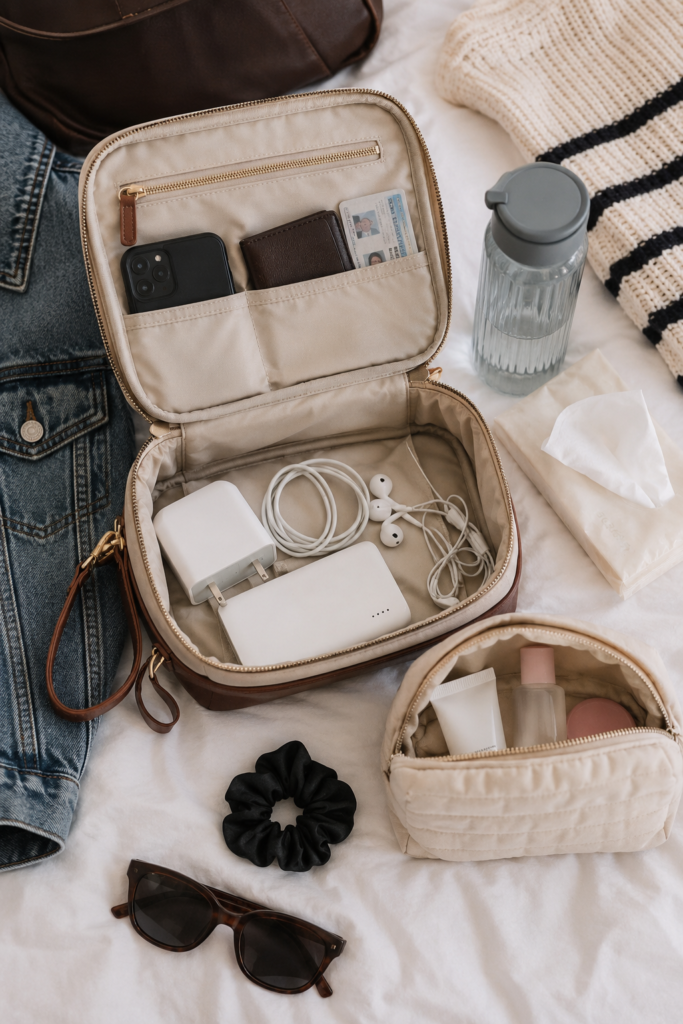
Instead, carry a small personal bag.
Keep your frequently used items there:
- Phone
- Wallet
- ID
- Charger
- Power bank
- Earphones
- Water bottle
- Tissues
- Hand sanitiser
- Snacks
- Basic toiletries
- Other personal essentials
Your main luggage can hold your clothes and things you won’t need during the journey.
Think of it this way:
Suitcase = things you need at your destination.
Personal bag = things you need during the journey.
This one change can make a surprisingly big difference.
5. Don’t Overpack Just Because You Can
Indian Railways has specific luggage allowances based on your travel class.
For example, the current rules list a free allowance of 70 kg in AC First Class, 50 kg in AC 2-Tier/First Class, 40 kg in AC 3-Tier and Sleeper Class, and 35 kg in Second Class. There are also marginal allowances and maximum limits.
But here’s the practical part.
You don’t have to use your entire allowance.
A heavy suitcase can become annoying very quickly.
You may have to:
- Carry it through the station
- Lift it into the coach
- Find space for it
- Move it around at your destination
Pack what you can realistically manage.
If you’re travelling for a short holiday, you probably don’t need your entire wardrobe.
6. Pack a Small Travel Pouch
This is especially useful for longer journeys.
Put your small essentials in one pouch instead of scattering them across your luggage.
You could include:
- Toothbrush and toothpaste
- Face wash
- Moisturiser
- Lip balm
- Tissues
- Wet wipes
- Comb
- Hair ties
- Hand sanitiser
For an overnight journey, add whatever else you personally need before sleeping or after waking.
Then you can simply grab the pouch when you need it.
No suitcase excavation required.
7. Think About Food Before You Board
You don’t have to pack a full meal for every train journey.
But having a few simple snacks can be useful.
You could carry foods that are:
- Easy to pack
- Easy to eat
- Not too messy
- Comfortable to carry
If you have specific food preferences or dietary restrictions, planning ahead is even more useful.
Also keep a water bottle with you.
The point isn’t to carry everything from home.
It’s simply to avoid being completely dependent on finding exactly what you want during the journey.
8. What Should You Wear on a Train Journey?
This is where comfort should win over complicated styling.
For a long train journey, choose clothes that let you:
- Sit comfortably
- Walk easily
- Sleep if needed
- Handle changes in temperature
- Use the washroom without fuss
A lightweight layer can also be useful.
And don’t forget footwear.
Shoes that are easy to slip on and off are often more practical than something uncomfortable or complicated.
Look put together, but don’t sacrifice comfort just for the journey photos.
9. Give Yourself Time at the Station
A train journey can become stressful before you even board.
Large railway stations can be confusing, especially if you’re visiting one for the first time.
You need time to:
- Enter the station.
- Find your platform.
- Check the train information.
- Locate your coach.
- Walk to your coach.
- Settle your luggage.
Don’t plan to arrive at the last possible minute.
A little extra time is much nicer than running across a crowded platform with a suitcase.
10. Keep Your Phone Ready
Your phone can become your most useful travel companion.
Before leaving home:
Charge it fully.
Then keep these in your personal bag:
- Charging cable
- Adapter
- Power bank
- Earphones
You can also download anything you may want during the journey.
For example:
- Music
- Podcasts
- Books
- Movies or shows available for offline viewing
- Travel documents
Don’t assume you’ll always have a perfect internet connection or an available charging point when you need one.
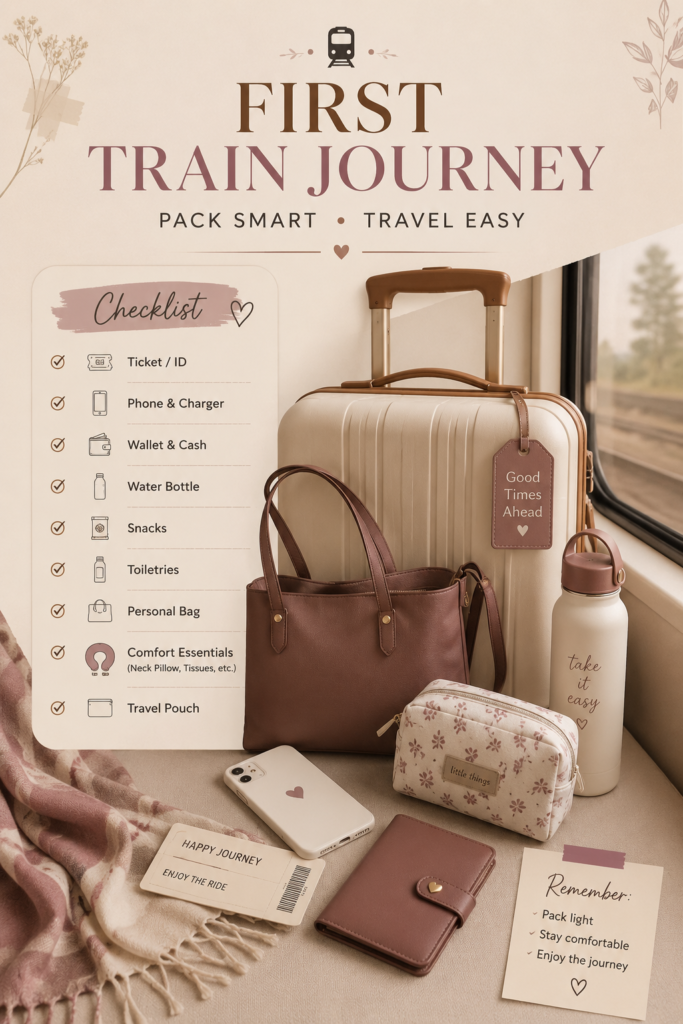
Your First Train Journey Checklist
Before leaving home, quickly run through this list.
Ticket & documents
☐ Check PNR status
☐ Check train number and departure time
☐ Check coach and berth
☐ Carry an accepted original photo ID
☐ Save your ticket details on your phone
Personal bag
☐ Phone
☐ Charger
☐ Power bank
☐ Wallet
☐ ID
☐ Water
☐ Snacks
☐ Tissues
☐ Hand sanitiser
☐ Earphones
Travel pouch
☐ Toothbrush
☐ Toothpaste
☐ Face wash
☐ Moisturiser
☐ Wet wipes
☐ Comb
☐ Hair ties
☐ Other personal essentials
Before leaving
☐ Charge your phone
☐ Check the latest train status
☐ Leave enough time for the station
☐ Keep valuables with you
☐ Avoid unnecessary luggage
Frequently Asked Questions
What should I carry for my first train journey in India?
Carry your ticket details, accepted original photo ID, phone, charger, power bank, water, simple snacks, basic toiletries and any personal essentials you may need during the journey.
Which berth is best on an Indian train?
There is no single best berth. A lower berth is easier to access, while an upper berth can offer more separation from daytime activity. Side berths can feel more private but are narrower.
How much luggage can I carry on an Indian train?
The free luggage allowance depends on your travel class. Current Indian Railways rules list different allowances for AC First Class, AC 2-Tier, AC 3-Tier, Sleeper and Second Class.
Do I need to carry ID while travelling by train?
Yes. For e-tickets, IRCTC requires at least one passenger booked on the ticket to carry an accepted original photo ID during the journey.
What food should I carry on a train?
Choose simple food that is easy to pack and eat. A few snacks and water can be useful, especially on a long journey or if you have specific food preferences.
How early should I reach the railway station?
There isn’t one universal arrival time that works for every station and journey. Give yourself enough time to find the platform, locate your coach and settle your luggage without rushing.
Final Thoughts
Your first train journey in India may feel complicated when you look at everything you need to remember.
It really isn’t.
Check your ticket. Keep your essentials close. Pack sensibly. Give yourself enough time. And don’t forget to make the journey comfortable for yourself.
Once you’ve done it once, many of the things that seemed confusing will become second nature.
And that is perhaps the best thing about train travel in India.
You don’t need to be an experienced traveller. You just need to know what to expect.