
Why Do I Feel Tired Even After Sleeping 8 Hours? 9 Everyday Habits That Could Be Draining Your Energy
If you’re getting around eight hours of sleep but still wake up feeling exhausted, you’re not alone. In many cases, everyday habits like inconsistent sleep schedules, dehydration, poor sleep quality, stress, or too much screen time can leave you feeling tired even after what seems like a full night’s rest.
The encouraging news? Small, consistent changes to your daily routine can often make a noticeable difference over time.
Why Can You Feel Tired Even After Sleeping Enough?
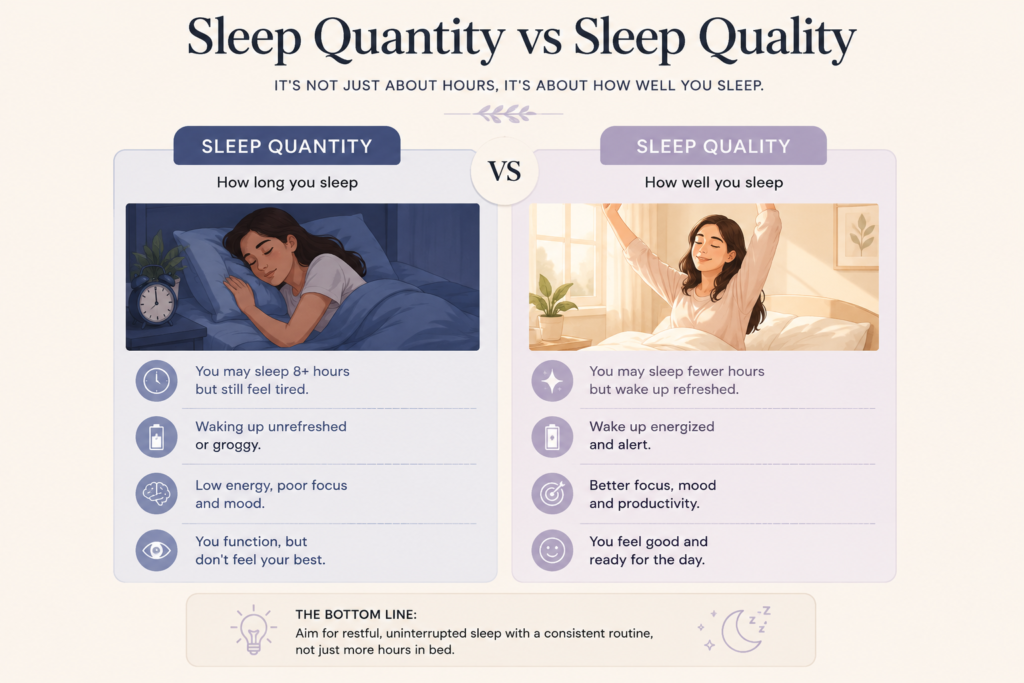
Getting eight hours of sleep doesn’t always mean your body is getting the quality rest it needs.
Your energy levels are influenced by much more than the number of hours you spend in bed. Factors like hydration, sleep quality, evening habits, stress, physical activity, and even your morning routine all play a role in how refreshed you feel when you wake up.
That’s why two people can sleep for the same amount of time but wake up feeling completely different.
Let’s look at some everyday habits that may be affecting your energy.
1. Your Sleep Schedule Isn’t Consistent
Going to bed at 10:30 PM one night and 2 AM the next can confuse your body’s internal clock.
Even if you eventually get eight hours of sleep, an inconsistent routine may leave you feeling groggy the next morning.
What may help
- Go to bed and wake up at roughly the same time every day.
- Avoid sleeping in for several extra hours on weekends.
- Give your body time to settle into a regular rhythm.
Many people focus on sleeping longer, when sleeping consistently can sometimes be just as important.
2. You Didn’t Drink Enough Water
Mild dehydration doesn’t always make you feel thirsty first. Sometimes, it simply leaves you feeling sluggish and low on energy.
If you aren’t drinking enough water throughout the day, your body may not feel fully refreshed the following morning.
What may help
- Sip water regularly instead of drinking large amounts all at once.
- Keep a water bottle nearby during the day.
- Include water-rich foods like fruits and vegetables in your meals.
3. You’re Not Getting Enough Morning Sunlight
Natural daylight helps support your body’s sleep-wake cycle.
If you spend most mornings indoors, your body may find it harder to feel fully alert after waking up.
A simple habit
Try spending 10–20 minutes outdoors soon after waking whenever possible.
Even a short walk or having your morning tea on the balcony can help you feel more awake.
4. Heavy Late-Night Meals May Affect Sleep Quality
A large dinner right before bed may leave your body busy digesting while you’re trying to rest.
You may still sleep for eight hours, but your sleep may not feel as restorative.
What may help
- Try eating dinner a couple of hours before bedtime whenever possible.
- Choose balanced evening meals rather than very heavy ones.
- Avoid going to bed feeling overly full.
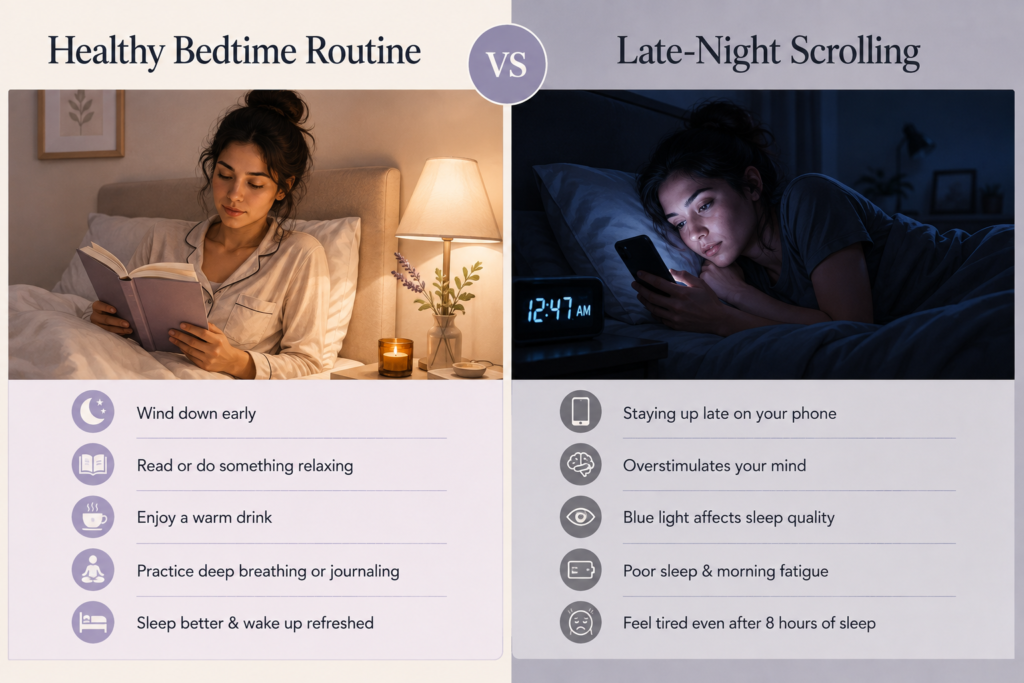
5. Too Much Screen Time Before Bed
Scrolling social media or watching videos late into the night can make it harder for your mind to fully relax.
Even if you eventually fall asleep, your sleep quality may not feel as refreshing.
Try this instead
- Put your phone away 30–60 minutes before bed.
- Read a book or listen to calming music.
- Keep bright screens out of the bedroom if possible.
6. Everyday Stress Can Leave You Feeling Drained
Stress doesn’t always stop you from sleeping.
Sometimes you sleep through the night but still wake up feeling mentally exhausted because your mind has been under constant pressure.
Work deadlines, family responsibilities, financial worries, and busy schedules can all affect how refreshed you feel.
Small habits that may help
- Write tomorrow’s to-do list before bed.
- Practice deep breathing or gentle stretching.
- Create a relaxing bedtime routine that helps you unwind.
Many people blame their sleep when ongoing stress is actually playing a much bigger role.
7. Sitting Most of the Day
It sounds surprising, but doing very little physical activity can sometimes leave you feeling even more tired.
Movement supports circulation and helps many people feel more energetic throughout the day.
What may help
- Take short walking breaks every hour if you work at a desk.
- Stretch for a few minutes during the day.
- Aim for regular movement that feels comfortable for your fitness level.
You don’t need an intense workout to notice a difference.
8. Your Breakfast May Not Be Keeping You Energized
A breakfast made mostly of sugary or refined foods may give you a quick burst of energy followed by a mid-morning slump.
Consider including
- Protein (such as eggs, yogurt, or dal-based options)
- Fibre-rich foods
- Healthy fats
- Fresh fruit
A balanced breakfast may help support steadier energy levels throughout the morning.
9. Too Much Caffeine Can Backfire
Coffee can temporarily make you feel more awake, but relying on multiple cups throughout the day may leave you stuck in a cycle of energy highs and crashes.
For some people, caffeine later in the day may also affect sleep quality without them realizing it.
A simple approach
- Enjoy caffeine in moderation.
- Try not to rely on coffee as the only solution for tiredness.
- Avoid caffeine close to bedtime if you notice it affects your sleep.
A Simple Daily Routine That May Help You Feel More Energized
You don’t need a complicated wellness routine.
Start with these simple habits:
✔ Drink water soon after waking
✔ Get 10–20 minutes of natural daylight
✔ Eat a balanced breakfast
✔ Move your body regularly throughout the day
✔ Limit screen time before bed
✔ Keep a consistent sleep schedule
Small changes often become easier to maintain than dramatic lifestyle overhauls.
Does This Actually Work?
It depends on what’s causing your tiredness.
If low energy is linked to everyday habits like hydration, sleep quality, stress, or inconsistent routines, many people notice gradual improvements after becoming more consistent with healthy habits.
There’s rarely an overnight solution, but small lifestyle changes often add up over time.
When Is It Worth Paying Attention?
Feeling tired occasionally is common, especially during busy or stressful periods.
However, if fatigue is severe, lasts for several weeks, regularly interferes with your daily activities, or occurs alongside symptoms such as unexplained weight loss, chest pain, fainting, persistent fever, or shortness of breath, it’s important to seek advice from a qualified healthcare professional for a proper evaluation.
Frequently Asked Questions
Why do I feel tired even after sleeping 8 hours?
Everyday factors like poor sleep quality, dehydration, stress, inconsistent sleep schedules, or lack of physical activity can all affect how refreshed you feel, even if you’re sleeping for around eight hours.
Can dehydration make you feel tired?
Yes. Not drinking enough water may leave you feeling sluggish or low on energy, even before you feel noticeably thirsty.
Why do I wake up feeling exhausted every morning?
Morning tiredness may be linked to poor sleep quality, irregular routines, late-night habits, stress, or lifestyle factors that affect how well your body rests overnight.
Does sleeping too much make you feel tired?
Some people feel groggy after sleeping significantly longer than usual. Keeping a consistent sleep schedule often feels more refreshing than occasionally sleeping for many extra hours.
Can stress make you tired even if you sleep well?
Yes. Ongoing mental or emotional stress can leave you feeling drained, even if you’re getting enough hours of sleep.
Final Thoughts
Feeling tired even after sleeping eight hours can be frustrating, but it isn’t always a sign that you need more sleep.
Sometimes, simple habits like staying hydrated, improving your bedtime routine, getting morning sunlight, moving more during the day, and managing stress can make a meaningful difference.
Pay attention to patterns, make one small change at a time, and give your body time to respond. Consistency often has a bigger impact than chasing quick fixes.