
Why Do I Wake Up Looking Puffy? 9 Everyday Reasons (And What Actually Helps)
Why Do I Wake Up Looking Puffy?
Waking up looking puffy is often caused by temporary fluid retention that happens overnight. Common everyday reasons include a salty dinner, dehydration, sleeping flat, poor-quality sleep, alcohol, late-night meals, allergies, and stress. In most cases, the puffiness improves within a few hours of getting up and moving around.
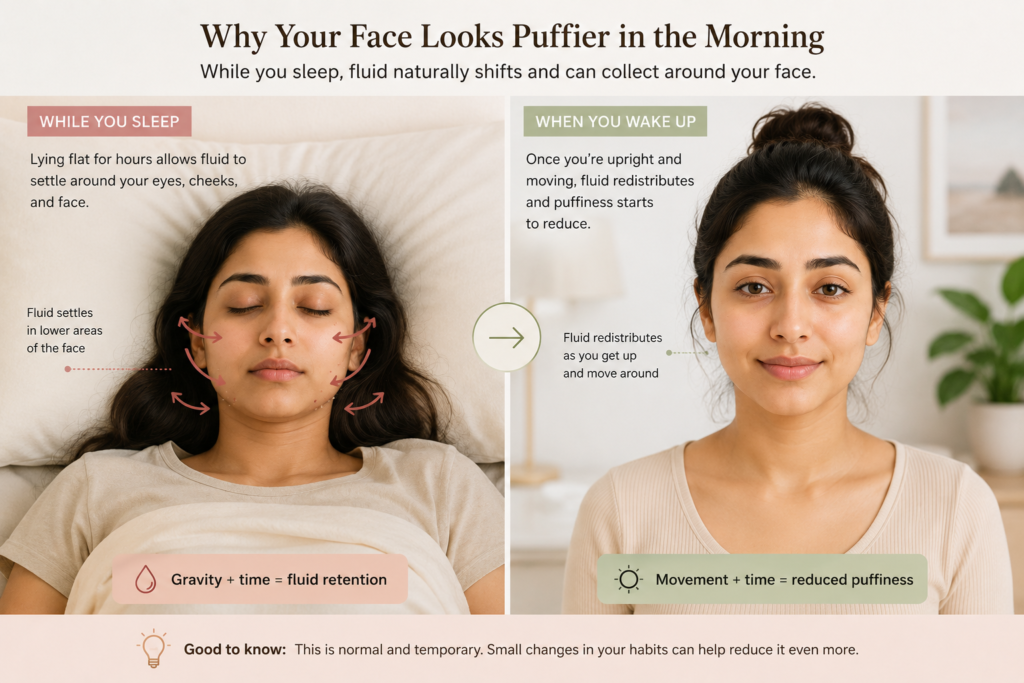
Why Does Your Face Look Puffier in the Morning?
While you sleep, your body naturally redistributes fluids. Since you’re lying flat for several hours, some fluid can temporarily collect around your eyes and cheeks. This is why many people notice a fuller-looking face immediately after waking up.
In real life, most morning puffiness fades once you’ve been upright, moved around, and started your day.
Signs Your Morning Puffiness May Be Related to Everyday Habits
You may be dealing with lifestyle-related puffiness if:
- It improves within a few hours of waking.
- Both sides of your face look equally puffy.
- It happens after a salty meal.
- It appears after poor sleep.
- It comes and goes rather than staying constant.
| Possible Cause | Most Noticeable Symptom |
| Salty dinner | Puffy eyes in the morning |
| Poor sleep | Puffy face + tired appearance |
| Dehydration | Swollen-looking face despite feeling thirsty |
| Late-night meals | Full, heavy feeling the next morning |
| Sleeping position | Puffiness around eyes and cheeks |
Morning puffiness can also affect how makeup sits on the skin. If you’ve noticed your foundation looking uneven, you may also enjoy our guide on Why Does My Foundation Look Patchy?
1. You Ate a Very Salty Dinner
People often assume they ate “healthy” because the meal wasn’t greasy. However, many restaurant soups, sauces, and packaged foods contain surprisingly high amounts of salt.
Salt encourages your body to hold onto extra water. Because fluid tends to shift while you’re lying down, this retained water can become more noticeable around the eyes and cheeks the next morning. This can make your face appear puffier the next morning.
What may help
- Cook more meals at home when possible.
- Balance salty meals with plenty of water throughout the day.
- Include fresh fruits and vegetables regularly.
Most people don’t notice this, but the effects of a salty dinner are often most visible around the eyes the following morning.
2. You Didn’t Drink Enough Water
It sounds surprising, but dehydration can sometimes make your body hold onto water more efficiently.
If you haven’t been drinking enough fluids during the day, your face may appear slightly swollen after waking up.
What may help
- Sip water consistently throughout the day.
- Don’t wait until you’re thirsty.
- Reduce excessive sugary drinks.
3. Your Sleeping Position Matters
Most people don’t think about their sleeping position until they notice one side of their face looking puffier than the other in morning photos. Sleeping face-down or with your head completely flat may encourage fluid to collect around the eyes.
Try this instead
- Sleep on your back if it’s comfortable.
- Use a pillow that keeps your head slightly elevated.
Many people notice less puffiness simply by changing how they sleep.
4. You Didn’t Sleep Well
It’s not just the number of hours that matters; sleep quality also plays a role.
Interrupted sleep can sometimes leave your face looking tired and less refreshed.
Build a better evening routine
- Limit screens before bed.
- Keep your bedroom cool and comfortable.
- Aim for a consistent bedtime.
5. Alcohol the Night Before
Alcohol may contribute to dehydration, which can make your face appear less refreshed the following morning.
If you notice a pattern after social events, this may be one reason.
Helpful habit
Drink water alongside alcoholic beverages and stay hydrated the next day.
6. Seasonal Allergies or Everyday Irritants
Dust, pollen, pet dander, or other environmental irritants may leave your eyes looking swollen when you wake up.
Even changing your pillowcase regularly can sometimes make a difference.
Simple habits
- Wash pillowcases weekly.
- Keep your bedroom clean.
- Shower before bed during high-pollen seasons if you’ve spent time outdoors.
7. Late-Night Meals
Eating a heavy meal shortly before bedtime may leave you feeling sluggish the next morning.
Many people also notice their face feels slightly fuller after large evening meals.
A simple adjustment
Try finishing dinner a couple of hours before going to bed whenever possible.
8. Stress Can Show on Your Face
Busy schedules, poor sleep, and everyday stress don’t just affect how you feel; they can also affect how refreshed you look.
In real use, people often blame skincare products when their lifestyle habits are actually making the bigger difference.
Simple relaxation habits like reading, stretching, or limiting phone use before bed can help improve your bedtime routine.
9. Your Morning Routine Could Be Making It Worse
Rubbing your eyes, skipping water, or staying inactive immediately after waking may make puffiness seem more noticeable.
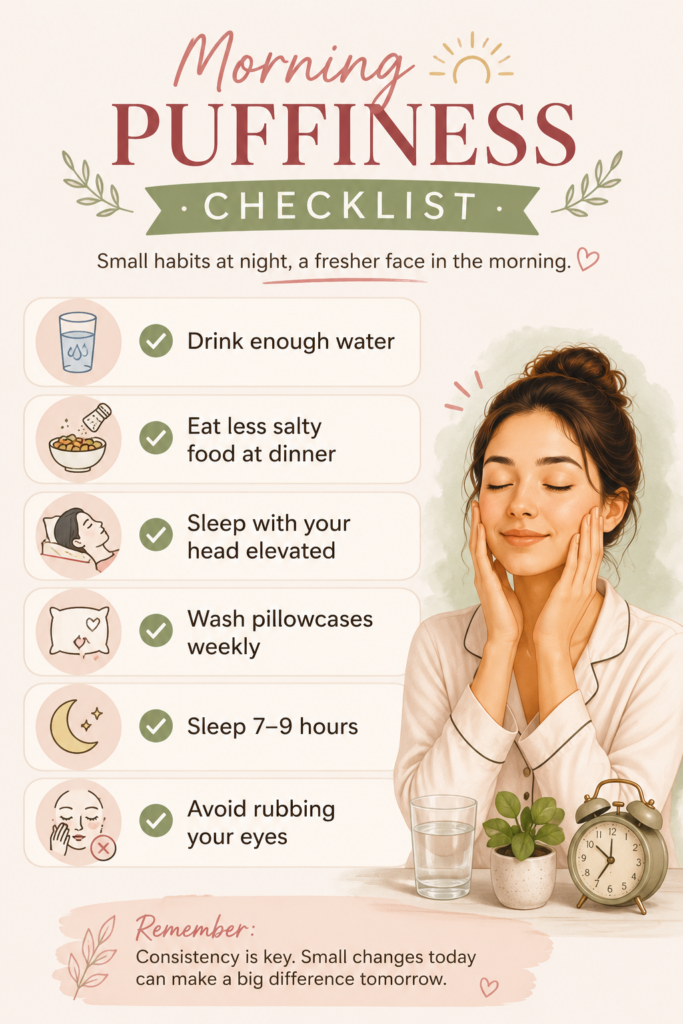
Instead, try this morning routine
- Drink a glass of water.
- Wash your face with cool water.
- Open the curtains and get natural daylight.
- Move around for a few minutes.
- Avoid rubbing your eyes.
These simple habits help many people feel more awake and refreshed.
A Simple Evening Routine That May Help Reduce Morning Puffiness
You don’t need an expensive routine.
Try this checklist:
1–2 hours before bed
- Finish your main meal.
- Limit very salty snacks.
30 minutes before bed
- Reduce screen time.
- Prepare for sleep.
Before sleeping
- Ensure your pillow is comfortable.
- Keep water nearby if needed.
Does This Actually Work?
It depends on what’s causing your morning puffiness.
If it’s related to everyday habits like hydration, sleep, or diet, many people notice gradual improvement after making consistent lifestyle changes.
There’s no overnight fix, but small habits often add up over time.
When Is It Worth Paying Attention?
Temporary puffiness that improves during the day is common.
However, if swelling is severe, painful, affects only one side of your face, or continues despite healthy lifestyle habits, it’s a good idea to seek advice from a qualified healthcare professional for a proper evaluation.
What Doesn’t Usually Help Morning Puffiness?
- Constantly washing your face.
- Applying more skincare products.
- Rubbing your eyes.
- Ignoring hydration throughout the day.
- Looking for a single “miracle fix.”
Frequently Asked Questions
Why is my face only puffy in the morning?
Fluid naturally shifts while you sleep. Salt intake, hydration, and sleeping position can make this more noticeable.
Does drinking more water reduce facial puffiness?
Staying well hydrated supports your body’s normal fluid balance and may help if dehydration is contributing to temporary puffiness.
Is morning puffiness normal?
Occasional mild puffiness after waking is common and often improves within a few hours.
Can sleeping position affect facial puffiness?
Yes. Sleeping with your head slightly elevated may reduce fluid pooling around the face for some people.
Why do my eyes look puffy even when the rest of my face looks normal?
The skin around the eyes is thinner than other areas of the face, making fluid retention more noticeable there. This is why many people notice puffy eyes before they notice puffiness elsewhere.
Final Thoughts
Waking up with a puffy face can be frustrating, but it’s often linked to simple everyday habits rather than your skincare routine.
Before changing your skincare routine or buying new products, pay attention to your daily habits. In many cases, better hydration, improved sleep, and a more consistent evening routine make a bigger difference than any beauty product.
Pro Tip:
Keep a 3-Day Puffiness Journal
For three mornings, write down:
- What time you slept.
- What you ate for dinner.
- How much water you drank.
- Whether your face looked puffy.
Most people start seeing patterns surprisingly quickly.