Why Does My Grocery Bill Feel So High? 12 Ways to Spend Less Without Eating Boring Food
You walk into the grocery store for a few basics.
Milk. Eggs. Some fruit. Maybe chicken for dinner.
Then you reach the checkout.
$127.
And you’re standing there wondering what exactly you bought that cost $127.
If your grocery bill seems to climb even when you don’t feel like you’re buying anything extravagant, you’re not imagining all of it. In the U.S., prices for food at home were 2.7% higher in July 2026 than they were a year earlier, according to the Bureau of Labor Statistics. Some categories rose even faster: fruits and vegetables were up 5.1%, while nonalcoholic beverages were up 4.1%. (Bureau of Labor Statistics)
But higher prices aren’t always the whole story.
Sometimes grocery spending quietly increases because we’re buying ingredients for too many different meals, choosing packages we’ll never finish, forgetting what’s already in the freezer or repeatedly throwing away food we had every intention of eating.
If you’re wondering how to save money on groceries without making every meal feel like a budget meal, start with how you shop – not necessarily with what you love eating.
Here are 12 realistic changes that can help.
Why Is My Grocery Bill So High?
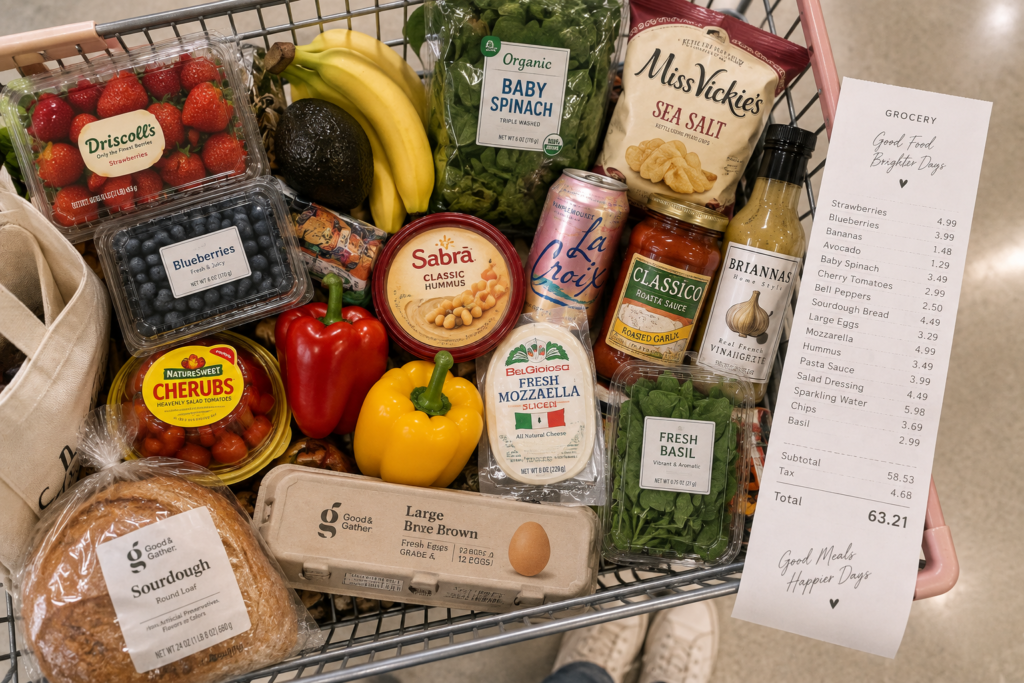
Before cutting things from your cart, it helps to figure out where the money is actually going.
A high grocery bill can come from several places at once: higher food prices, buying more than you’ll realistically use, relying heavily on convenience foods, shopping without checking what you already own, impulse purchases or buying completely different ingredients for every meal.
And there’s one particularly frustrating version of this:
You spend a lot on groceries…and still feel like there’s nothing to eat.
That’s often less of a food problem and more of a planning problem.
Your refrigerator may contain plenty of ingredients. They just don’t work together particularly well.
That’s where I’d start.
How to Save Money on Groceries: 12 Realistic Ways
1. Stop Shopping for Seven Completely Different Days
Monday is tacos.
Tuesday is pesto pasta.
Wednesday is salmon with roasted vegetables.
Thursday is Thai curry.
Friday is homemade pizza.
That sounds like a lovely week of dinners.
It can also produce a surprisingly expensive grocery list.
Suddenly you need tortillas, taco toppings, cilantro, pesto, Parmesan, salmon, coconut milk, curry paste, pizza dough, mozzarella and a collection of vegetables.
Instead, create a little ingredient overlap.
If you’re buying bell peppers, perhaps they go into tacos one night and pasta another. Spinach could appear in your morning eggs and later in a pasta dish. Rotisserie chicken could become a wrap one day and tacos the next.
You’re not eating the same meal repeatedly.
You’re simply giving the groceries you buy more than one job.
Try this: Before buying an ingredient for one particular recipe, ask yourself where else you could realistically use it that week.
2. Shop Your Kitchen Before You Shop the Store
Before writing your grocery list, open:
Your refrigerator.
Your freezer.
Your pantry.
Actually look.
That last part matters.
It’s very easy to think, We’re out of pasta, while two boxes are hiding behind the cereal.
The FDA specifically recommends checking the refrigerator before grocery shopping and planning your list around both upcoming meals and food you already have. (U.S. Food and Drug Administration)
I like taking this one step further.
Instead of asking:
“What do I want to cook this week?”
start with:
“What do I already have that needs using?”
Half a bag of spinach?
Maybe that becomes the starting point for Monday’s meal.
Frozen chicken you’ve forgotten about?
There’s Tuesday.
Three tortillas?
Wednesday’s lunch suddenly has a plan.
You’re building the grocery list around your kitchen instead of starting from zero every week.
3. Give Expensive Ingredients More Than One Job
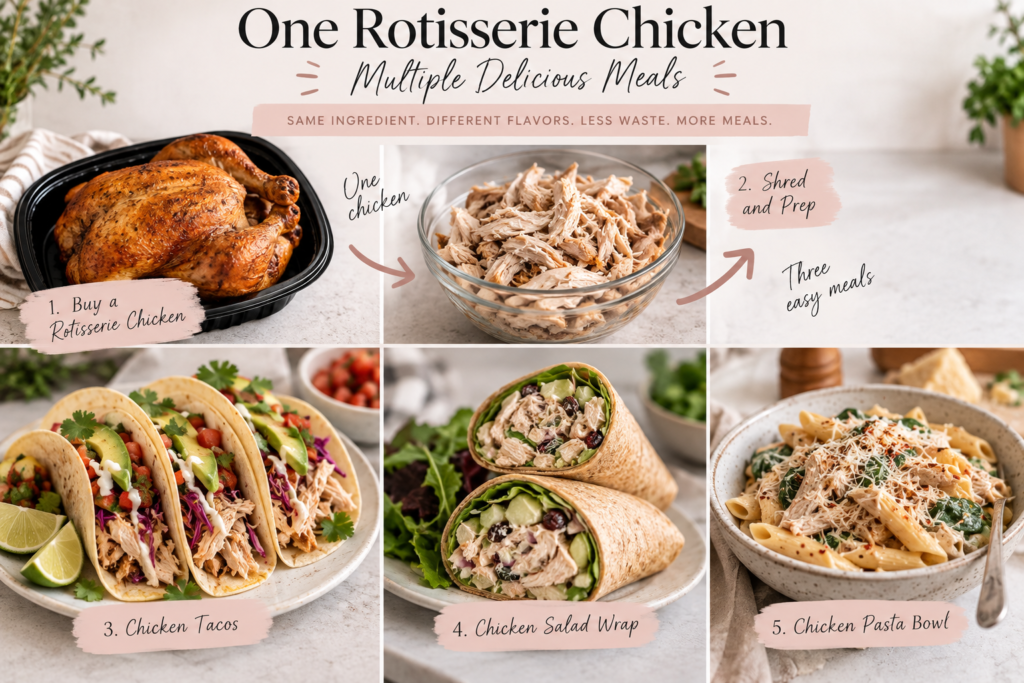
It’s rarely the $1 onion that wrecks the grocery budget.
It’s often the collection of more expensive ingredients bought for one very specific purpose.
You buy feta for one salad.
Fresh herbs for one recipe.
A particular cheese for one pasta.
A specialty sauce for something you saw online.
Then you use three tablespoons.
The rest slowly moves toward the back of the refrigerator.
This doesn’t mean you should stop buying ingredients that make food interesting. That would defeat the whole point of saving money without eating boring food.
Instead, apply what I call the three-meal test.
Before buying a more expensive or highly perishable ingredient, think of two or three realistic ways you’ll use it.
For example:
Feta: salad → eggs → grain bowl
Rotisserie chicken: tacos → sandwich → pasta
Cilantro: tacos → rice bowl → salsa
Greek yogurt: breakfast → dip → sauce
The meals don’t have to be planned perfectly.
You simply want an ingredient to have somewhere to go after Recipe #1.
4. Compare the Unit Price, Not Just the Sticker Price
Here’s an easy grocery-store trap:
$4.99 looks cheaper than $6.49.
But that doesn’t necessarily mean it is.
The packages may contain different amounts.
That’s why the small unit-price information on the shelf can be more useful than the large price on the package.
Compare the price per ounce, pound or other unit when you’re deciding between different sizes or brands.
But there’s an important second half to this tip:
The lowest unit price isn’t automatically the best purchase.
A giant container may cost less per ounce, but if you’re likely to throw away a third of it, the theoretical saving doesn’t help much.
Which brings us to the next problem.
5. Stop Assuming Bigger Is Always Cheaper
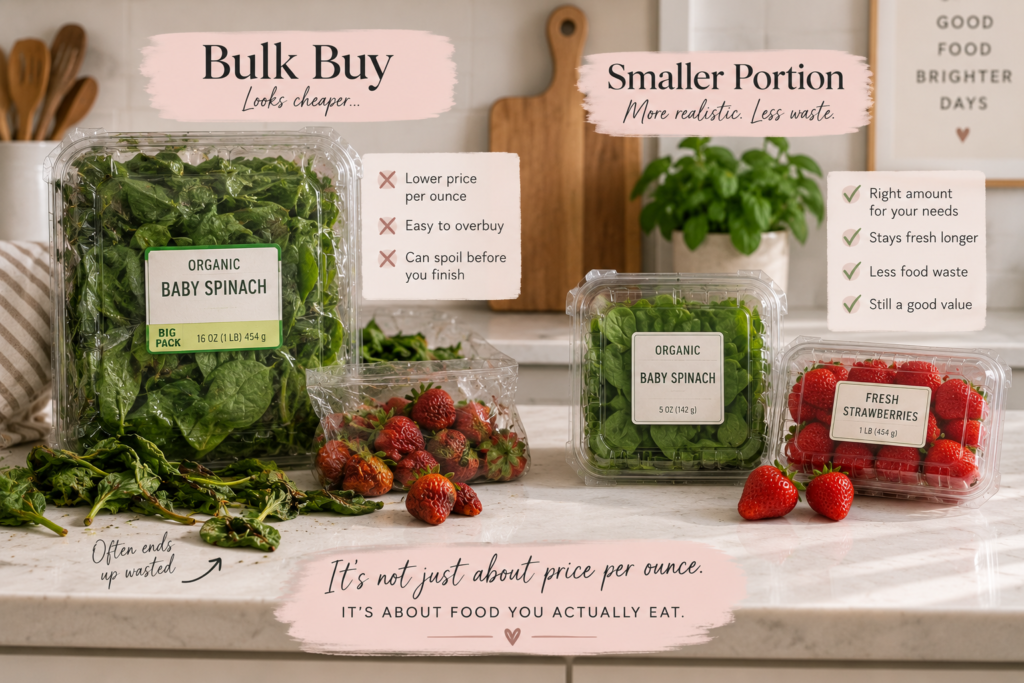
Bulk buying feels financially responsible.
Sometimes it absolutely is.
Rice you use constantly? Great.
Frozen foods your household eats regularly? Possibly.
A huge container of strawberries for one person because the unit price was lower?
Maybe not.
The FDA specifically cautions shoppers about bulk purchases of foods with limited shelf lives because buying more than you can use can contribute to food waste. (U.S. Food and Drug Administration)
The useful question isn’t:
“Is the bigger package cheaper?”
It’s:
“Will we finish the bigger package?”
If yes, fantastic.
If not, buy the smaller one—even when its price per ounce is technically higher.
Throwing away the cheaper-per-ounce food is still throwing away money.
6. Decide Which Store-Brand Products You Actually Like
You don’t need to replace everything you enjoy with the cheapest generic version available.
That’s not a particularly sustainable way to grocery shop.
Instead, experiment.
There may be products where you genuinely can’t tell much difference between the national brand and the store brand.
Maybe it’s canned tomatoes.
Pasta.
Flour.
Frozen vegetables.
Oats.
Or something completely different.
Then there may be one specific coffee, cereal or hot sauce where you absolutely prefer the branded version.
Keep it.
A realistic grocery budget doesn’t require turning food into a joyless exercise in finding the cheapest possible calorie.
Save where the difference doesn’t matter much to you, so you have more room for the foods where it does.
7. Use Your Freezer Before Food Becomes a Lost Cause
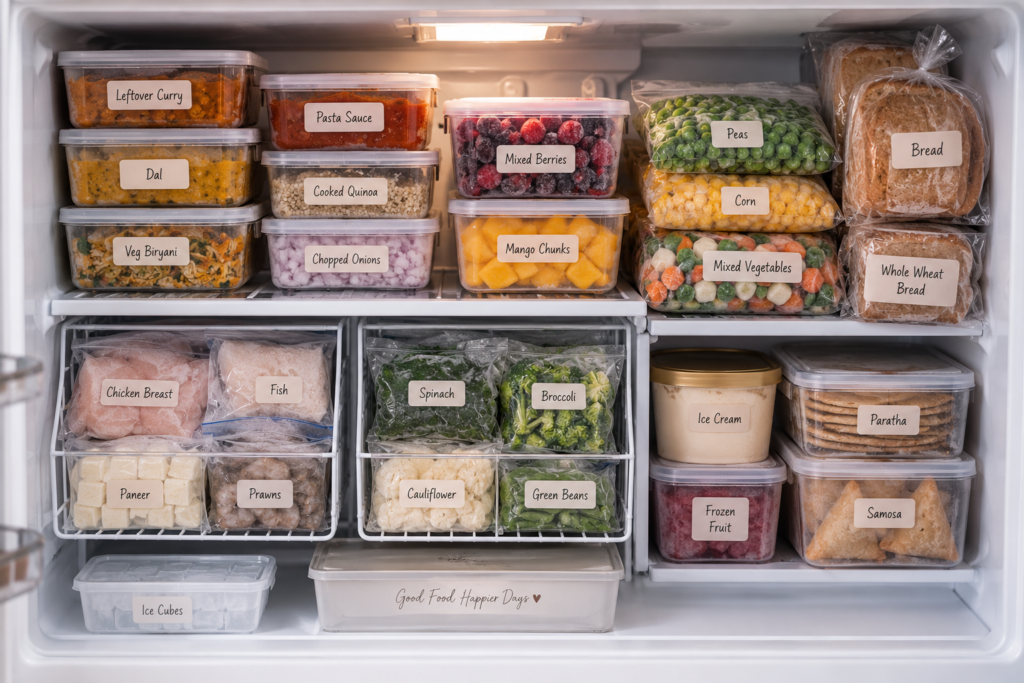
The freezer shouldn’t just be the place where frozen peas and an unidentified container from six months ago live.
It can be part of your grocery strategy.
Bought bread but aren’t going through it quickly enough?
Freeze some.
Made too much chili?
Freeze a portion.
Have ingredients approaching the point where you know you won’t use them as planned?
Check whether they’re suitable for freezing.
The FDA specifically recommends using the freezer to keep many foods from going bad before you’re ready to eat them. It also recommends regularly checking the refrigerator so food can be eaten or frozen before it needs to be discarded. (U.S. Food and Drug Administration)
Just don’t treat freezing as an unlimited pause button for quality. The FDA notes that properly frozen food held at 0°F remains safe, but its flavor, texture and other quality characteristics can decline over time. (U.S. Food and Drug Administration)
A useful habit: Have a visible freezer list on your phone.
Because frozen food only saves money if you remember it exists.
8. Have One “Use What We Have” Meal Every Week
This may be one of the easiest ways to reduce grocery spending without changing what you normally eat.
Once a week, don’t follow a recipe.
Open the refrigerator and build dinner around whatever needs attention.
A few vegetables + leftover rice + egg?
Fried rice.
Tortillas + leftover chicken + cheese?
Quesadillas.
Vegetables + pasta + half a jar of sauce?
Dinner.
Eggs + random vegetables + cheese?
Frittata or omelet.
The point isn’t to invent a culinary masterpiece.
It’s to create one flexible meal slot where unfinished ingredients have somewhere to go.
And oddly enough, these meals can sometimes be more interesting than the recipe you originally planned.
9. Don’t Automatically Avoid Convenience Foods
This one may sound strange in an article about how to save money on groceries.
Convenience usually costs more.
But price and value aren’t always the same thing.
Imagine you repeatedly buy whole heads of lettuce because they’re cheaper.
You intend to wash and chop them.
You don’t.
Eventually they wilt.
Meanwhile, you know you’d actually eat a bagged salad.
The more expensive option may make more sense for you.
The same logic can apply to frozen chopped vegetables, rotisserie chicken, pre-cut produce or other shortcuts.
I’m not suggesting buying everything pre-prepared.
I’m suggesting paying attention to your real behavior.
The cheapest ingredient isn’t a bargain if you consistently throw it away.
Sometimes paying a little more for the version you’ll actually cook can prevent spending much more on unused groceries and last-minute takeout.
10. Find the “Little Extras” in Your Cart
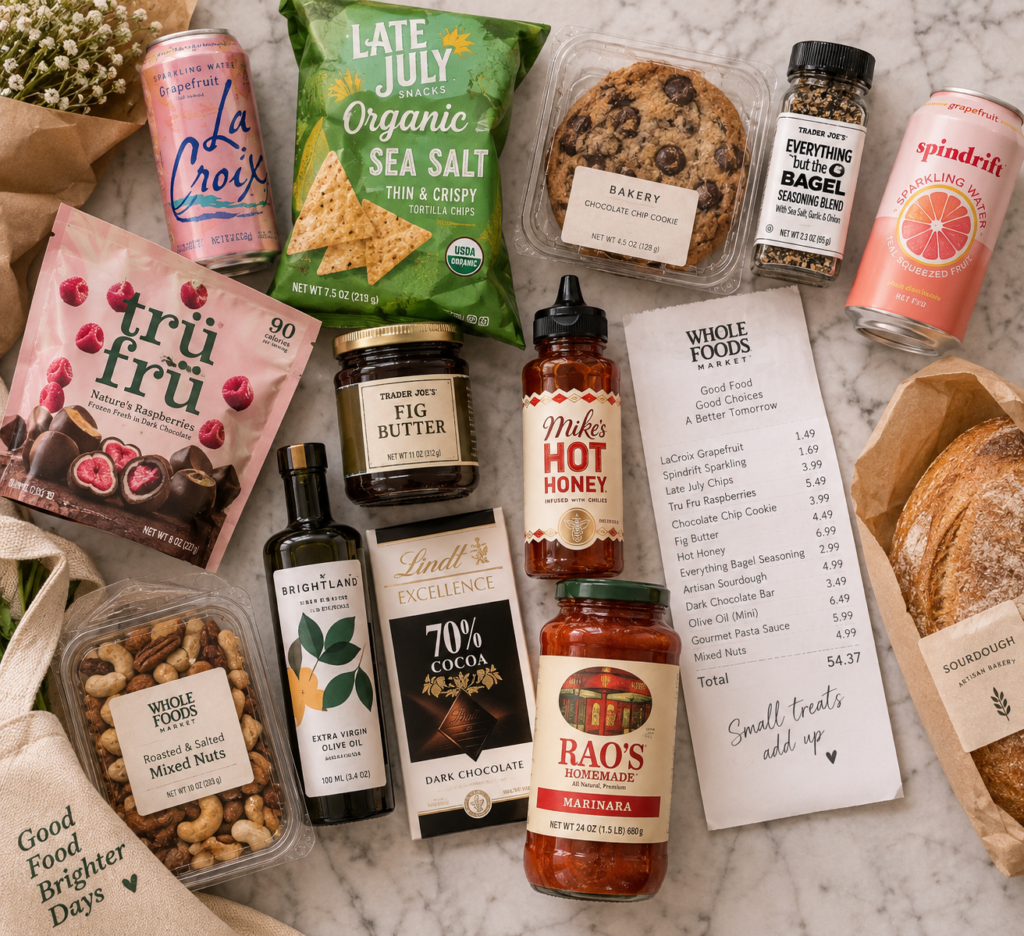
Your meals may not be what’s making your grocery bill unexpectedly high.
It could be everything surrounding them.
A drink near checkout.
A new sauce.
A package of individually wrapped snacks.
A seasonal treat.
Another sparkling water flavor.
Something from the bakery.
None of these purchases is necessarily a problem.
But $3 here and $6 there can disappear into a grocery cart remarkably easily.
Try looking at your receipt after your next shopping trip.
Don’t ask:
“What shouldn’t I have bought?”
Ask:
“Which purchases did I actually plan to buy?”
That distinction is much less judgmental—and much more useful.
You may discover that your actual weekly meals cost less than you thought, while the unplanned extras are where your grocery budget keeps expanding.
11. Don’t Confuse a Sale With Saving Money
BUY 2, GET 1 FREE.
Your brain sees:
Free food!
But imagine you walked into the store needing one.
Now you’ve purchased three.
Whether that’s a bargain depends entirely on what happens next.
If it’s a pantry staple your household regularly uses, the promotion may genuinely save money.
If it’s something perishable that you bought solely because it was on sale, maybe not.
The FDA similarly advises consumers to be cautious with promotions that encourage unusual or bulk purchases outside their normal needs, because some of that food can end up being wasted. (U.S. Food and Drug Administration)
A discount changes the price.
It doesn’t create a need.
Before adding a sale item to the cart, ask:
Would I have bought this if it weren’t on sale?
That question eliminates a surprising number of “savings.”
12. Stop Shopping for Your Fantasy Self
This may be my favorite grocery rule.
Your fantasy self wakes up early and makes smoothies.
She packs beautiful salads for lunch.
She snacks exclusively on freshly cut vegetables.
She cooks from scratch every evening.
She definitely uses the entire bunch of parsley.
So you shop for her.
Then Wednesday arrives.
Your actual self is tired, has three meetings, doesn’t want the salad and orders takeout.
There is nothing wrong with aspiring to eat differently.
But repeatedly buying food for habits you don’t currently have can get expensive.
Instead, build most of your grocery list around how you realistically eat now.
Then add one or two things for habits you’re trying to develop.
If you normally cook three nights per week, don’t buy ingredients for seven elaborate dinners.
If you never eat a certain fruit before it goes bad, stop buying six of them.
If Wednesday is always chaotic, perhaps Wednesday needs an easy freezer meal—not aspirational meal prep.
A good grocery budget isn’t the one that looks most impressive on paper.
It’s the one that survives real life.
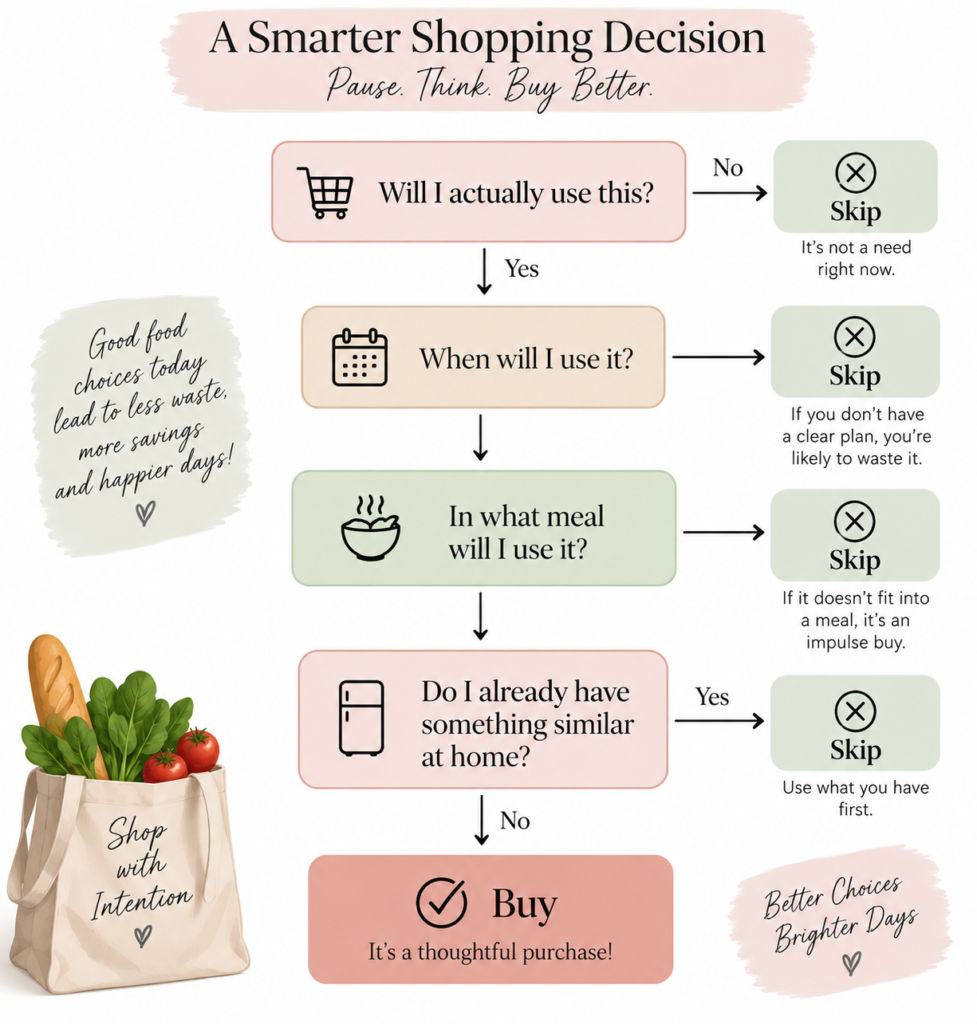
Try the “Will I Actually Use This?” Grocery Test
When you’re about to add something to your cart—particularly something perishable—ask:
When am I going to eat this?
Not:
Could I theoretically make something with this?
There’s a difference.
Buying spinach because:
“I should probably eat more greens.”
is an intention.
Buying spinach because:
“I’ll add it to pasta Monday, eggs Wednesday and quesadillas Thursday.”
is a plan.
You don’t need every ingredient mapped to a spreadsheet.
But if you can’t picture when you’ll use something, especially when you already have plenty of food at home, consider leaving it behind.
How to Save Money on Groceries Without Eating Boring Food
This is where many grocery-budget articles lose me.
Saving money doesn’t have to mean removing every interesting ingredient from your kitchen.
Instead, keep inexpensive foundations simple and spend selectively on the things that transform them.
Pasta itself can be inexpensive.
What makes Tuesday’s pasta different from Thursday’s might be pesto, Parmesan, roasted tomatoes or chili crisp.
Rice can become a burrito bowl, fried rice or a side for chicken depending on what you pair with it.
Eggs can become breakfast tacos, an omelet, fried rice or dinner on toast.
Beans can become tacos, soup, bowls or quesadillas.
The strategy is not:
Eat fewer things.
It’s:
Buy fewer ingredients that only do one thing.
That distinction makes budget-conscious eating much easier to maintain.
A Simple Grocery Routine You Can Actually Repeat
You don’t need a complicated spreadsheet or a perfectly calculated weekly menu.
Before shopping, try this sequence:
- Check your refrigerator, freezer and pantry.
- Choose a few meals based partly on what you already have.
- Look for ingredients that can overlap between meals.
- Add the staples you’ve genuinely run out of.
- Leave room for a couple of foods you simply enjoy.
- Plan one flexible “use what we have” meal.
- Shop from the list, but don’t panic if a better-value substitution makes sense.
The goal isn’t to win grocery shopping.
It’s to reach the end of the week with less food in the trash, fewer forgotten ingredients and fewer “we have nothing to eat” moments.
Frequently Asked Questions
Why is my grocery bill so high even when I don’t buy much?
Part of the increase may simply be food prices. U.S. food-at-home prices were 2.7% higher in July 2026 than a year earlier. (Bureau of Labor Statistics) Beyond inflation, small impulse purchases, food waste, specialty ingredients, convenience foods and buying ingredients that don’t work across multiple meals can also make a relatively small cart surprisingly expensive.
What is the easiest way to start saving money on groceries?
Start by checking your refrigerator, freezer and pantry before making your grocery list. Plan some meals around ingredients you already own and buy what’s missing. This is also consistent with the FDA’s food-waste guidance. (U.S. Food and Drug Administration)
Is buying in bulk always cheaper?
No. A larger package can have a lower unit price, but that doesn’t necessarily make it a better value for your household. If you won’t use the food before its quality declines or it spoils, a smaller package may make more sense. The FDA specifically recommends caution when buying perishable foods in bulk. (U.S. Food and Drug Administration)
How can I spend less on groceries without meal prepping?
You don’t need to prepare a week’s worth of meals in advance. Try choosing several meals that share ingredients, keeping one flexible leftovers meal, freezing suitable extras and checking what you already own before shopping.
How do I stop wasting groceries?
Buy realistic quantities, plan when you’ll use perishable foods, keep track of what’s already in your refrigerator and freezer, and freeze suitable foods before they go bad. The FDA recommends checking the fridge regularly and eating or freezing items before they need to be discarded. (U.S. Food and Drug Administration)
Should I buy store brands to save money?
They’re worth comparing, but you don’t need to replace every product you enjoy. Try store-brand versions of products where brand differences matter less to you, and keep your preferred brands where you genuinely notice the difference.
Final Thoughts
Learning how to save money on groceries doesn’t have to start with coupons, extreme budgeting or removing every fun food from your cart.
Start by paying attention to what happens after the groceries come home.
Which ingredients always get finished?
Which ones routinely get forgotten?
What do you keep buying because you think you’ll eat it?
Which ingredients only work for one recipe?
And what could you freeze before it goes to waste?
Your grocery bill may not change dramatically after one shopping trip. But small changes in what you buy, how much you buy and how completely you use it can make your grocery routine more efficient over time.
Spend less where you don’t care. Keep the foods you genuinely enjoy. And try to make sure more of what you pay for actually gets eaten.
That’s a grocery budget that’s much easier to live with.