Kurti Back Designs That Look Elegant, Not Overdone: 9 Ideas to Show Your Tailor
Sometimes a kurti looks perfectly nice from the front, but it is the back that makes you save the picture.
A tiny keyhole. A neat row of potli buttons. An unexpected line of piping. A dori that doesn’t end in enormous tassels.
The best kurti back designs don’t necessarily have the most details. Often, one well-placed detail is enough to make a simple kurti feel thoughtfully designed.
And that is exactly what this guide is about.
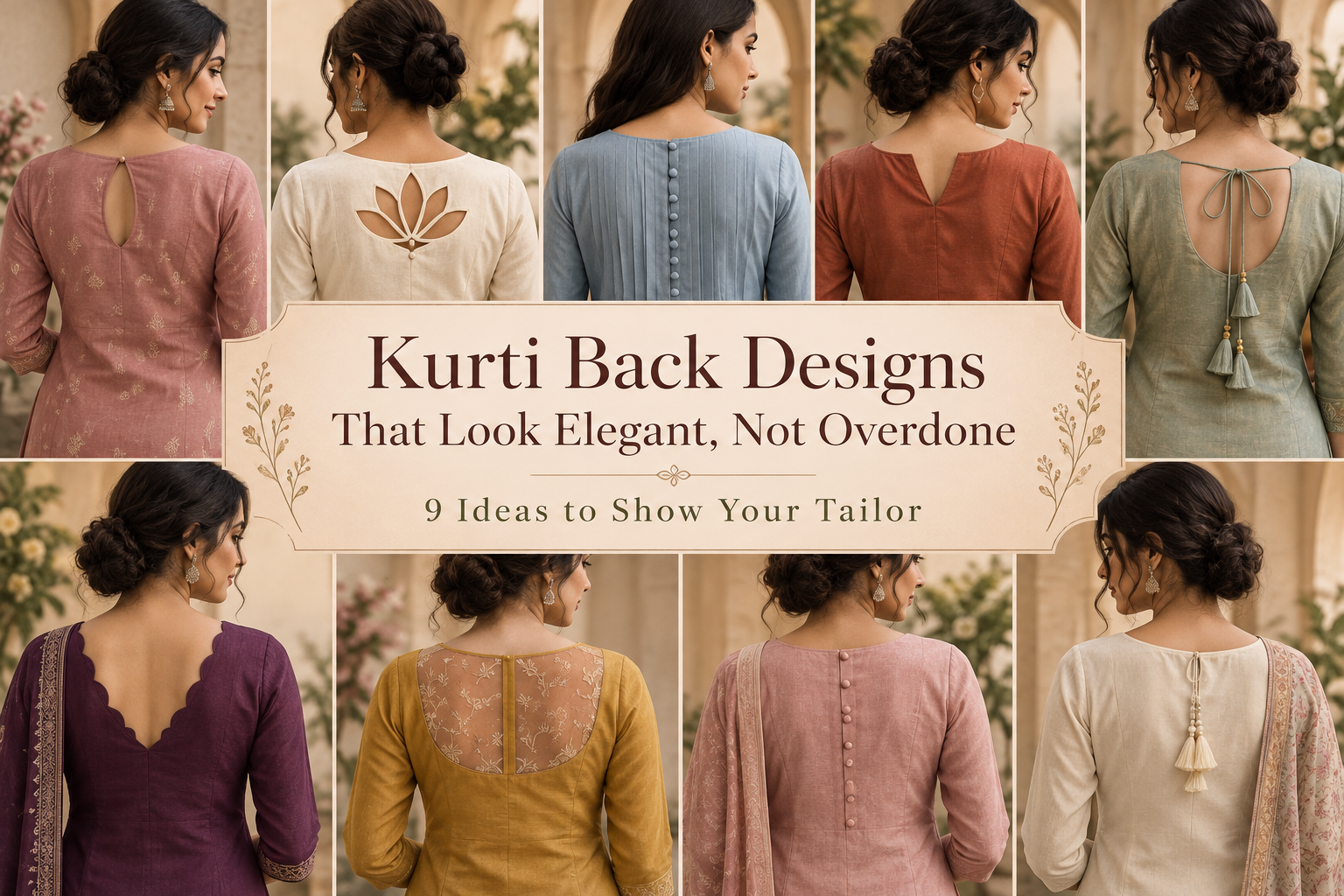
Instead of another gallery of elaborate cutouts, criss-cross strings and heavily decorated backs, these nine simple and elegant kurti back designs focus on clean shapes, wearable coverage and details you could realistically show your tailor.
For every design, you’ll also find suggestions for fabric, coverage and what to ask for when getting it stitched.
The Feminine Edit rule: Pick one hero detail. If the back has beautiful buttons, it probably doesn’t also need embroidery, contrast piping, tassels and a dramatic cutout.
1. Mini Teardrop Keyhole With One Potli Button
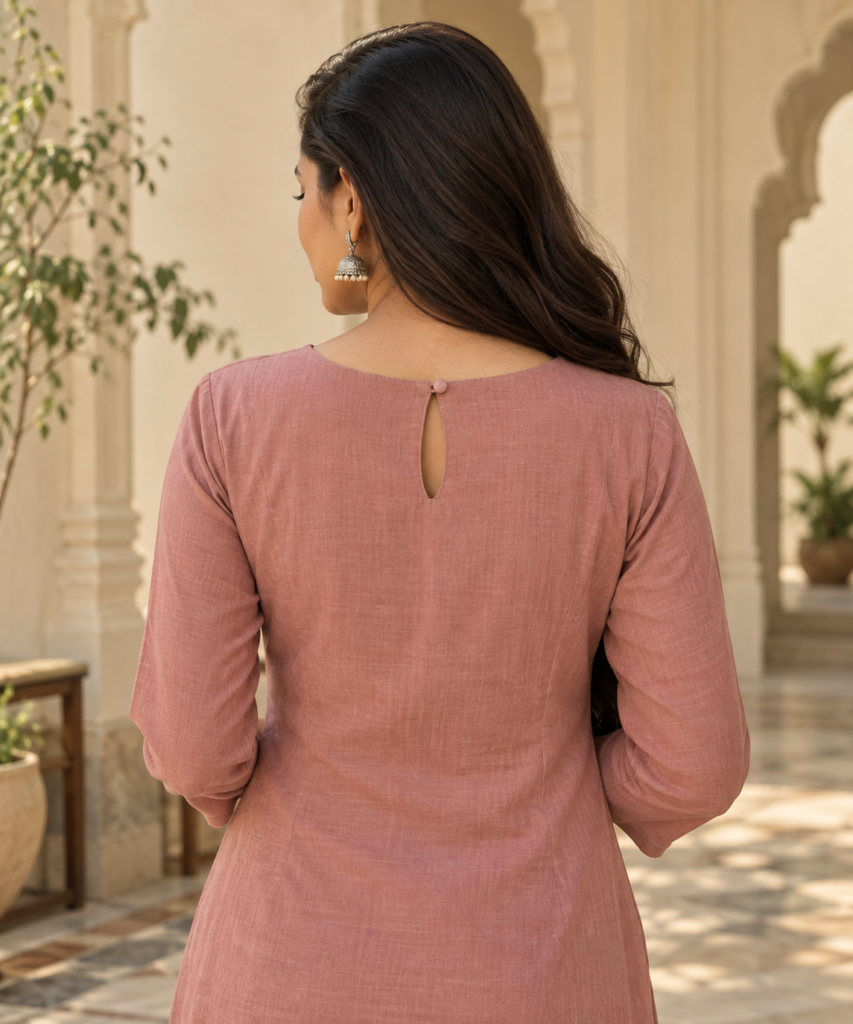
If you like kurti back neck designs with a little skin showing but don’t want a deep back, start here.
The base of the design is completely covered, with one narrow teardrop-shaped opening below the neckline. A single fabric-covered potli button closes it at the top.
Keyhole backs are already an established kurti design, commonly appearing with buttons or dori closures. Our version simply scales everything down.
Best for: Straight kurtis, A-line kurtis and everyday kurtas
Try it in: Cotton, linen, rayon or Chanderi
Coverage: High
Bra-friendly: Generally yes, provided the keyhole is positioned above the bra band
What to tell your tailor: Ask for a small, narrow teardrop opening rather than a large oval cutout. Keep the potli button in the same fabric as the kurti for a seamless finish.
Keep it elegant: Skip the tassels. The little button is enough.
2. Five-Potli Button Spine
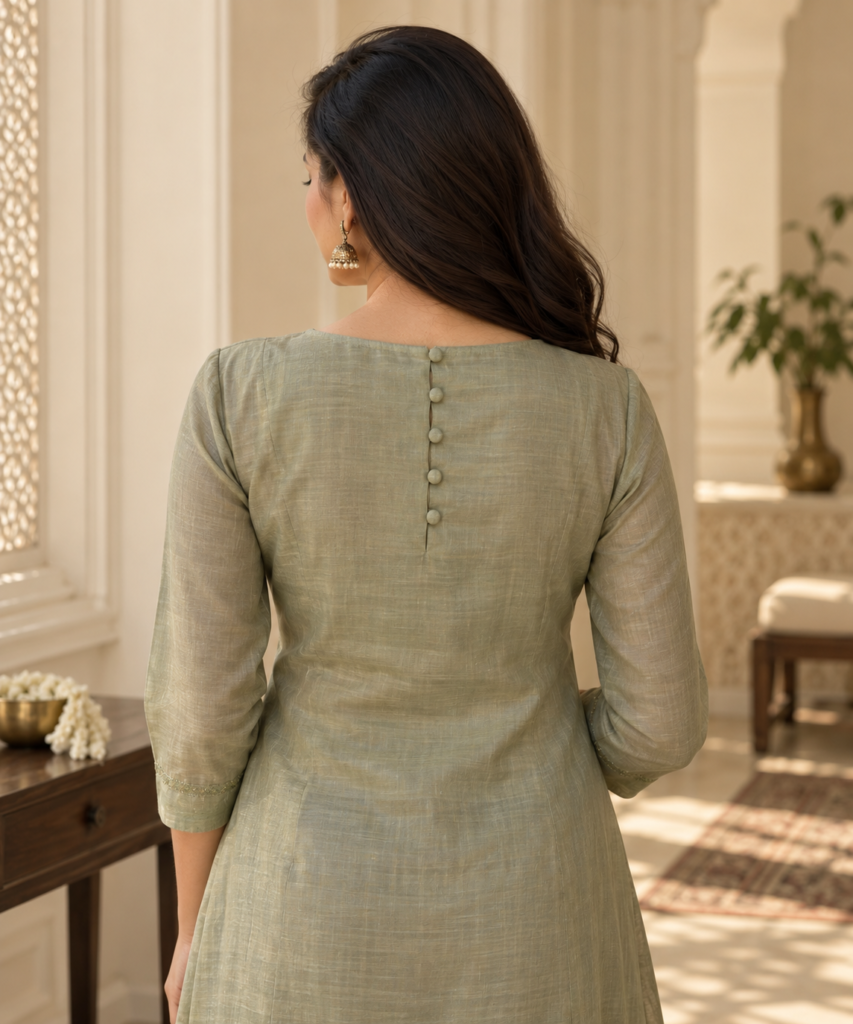
This is proof that an interesting back doesn’t need a cutout at all.
Use a high, clean back neckline and place five small fabric-covered potli buttons vertically along the center back.
Potli-button backs are already used across kurti designs, including versions on silk and Chanderi fabrics. The difference here is restraint: five carefully spaced buttons instead of embellishment running far down the back.
Best for: Straight kurtis, festive kurtas and A-line styles
Try it in: Chanderi, cotton-silk, raw silk or crisp cotton
Coverage: Full
Bra-friendly: Yes
What to tell your tailor: Keep the buttons small, tonal and evenly spaced. They can be decorative rather than functional if a functional placket isn’t necessary.
Keep it elegant: If the buttons are the feature, avoid adding a heavily embroidered back neckline as well.
3. Soft Square Back With Contrast Piping
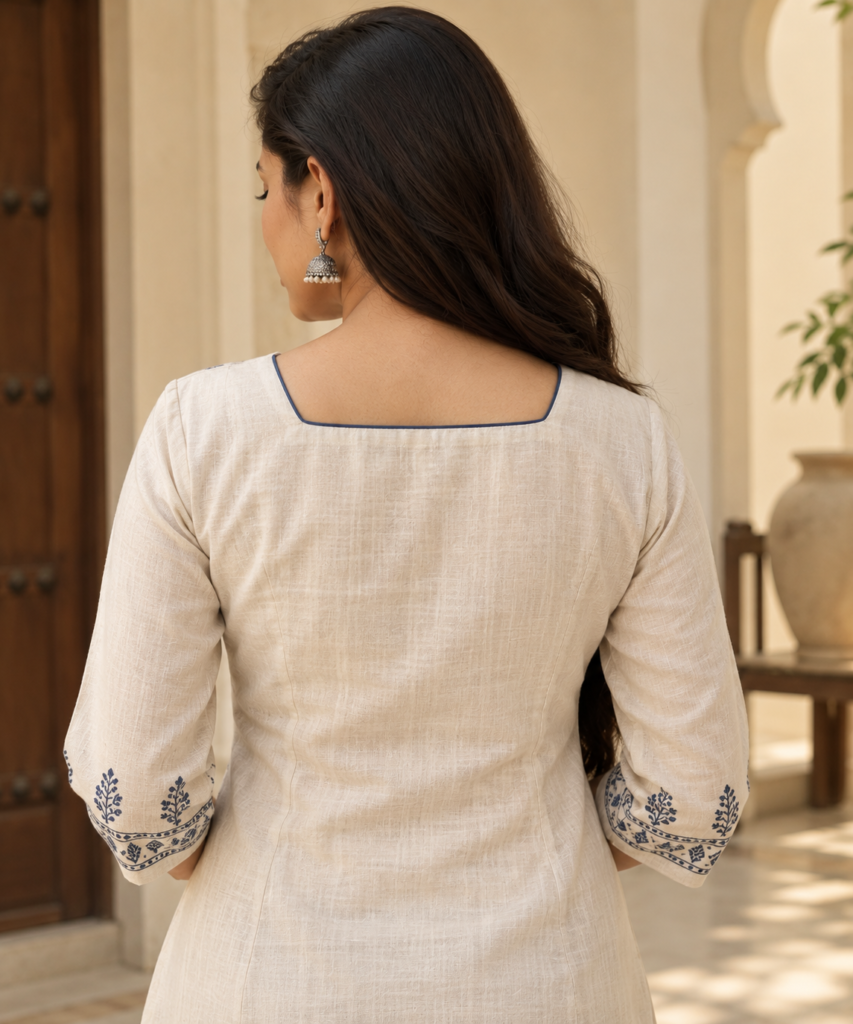
Square backs can look surprisingly contemporary, especially on cotton kurtis. Current styling guides also associate the clean geometry of a square back with a more structured, polished appearance.
But instead of a very wide or deep square, soften the corners slightly and keep the neckline modest.
Then outline it with one thin line of contrast piping.
Imagine an ivory cotton kurti with indigo piping, or dusty pink with deep maroon.
That’s the entire design.
Best for: Cotton kurtis, straight kurtas and office-friendly styles
Try it in: Cotton, linen, handloom fabrics or cotton-silk
Coverage: Medium to high, depending on depth
Bra-friendly: Usually, if kept shallow enough
What to tell your tailor: Ask for a shallow square back with slightly softened corners and very narrow contrast piping.
Keep it elegant: Don’t add another contrast border underneath. Let the geometry do the work.
4. Narrow V-Back With a Minimal Dori
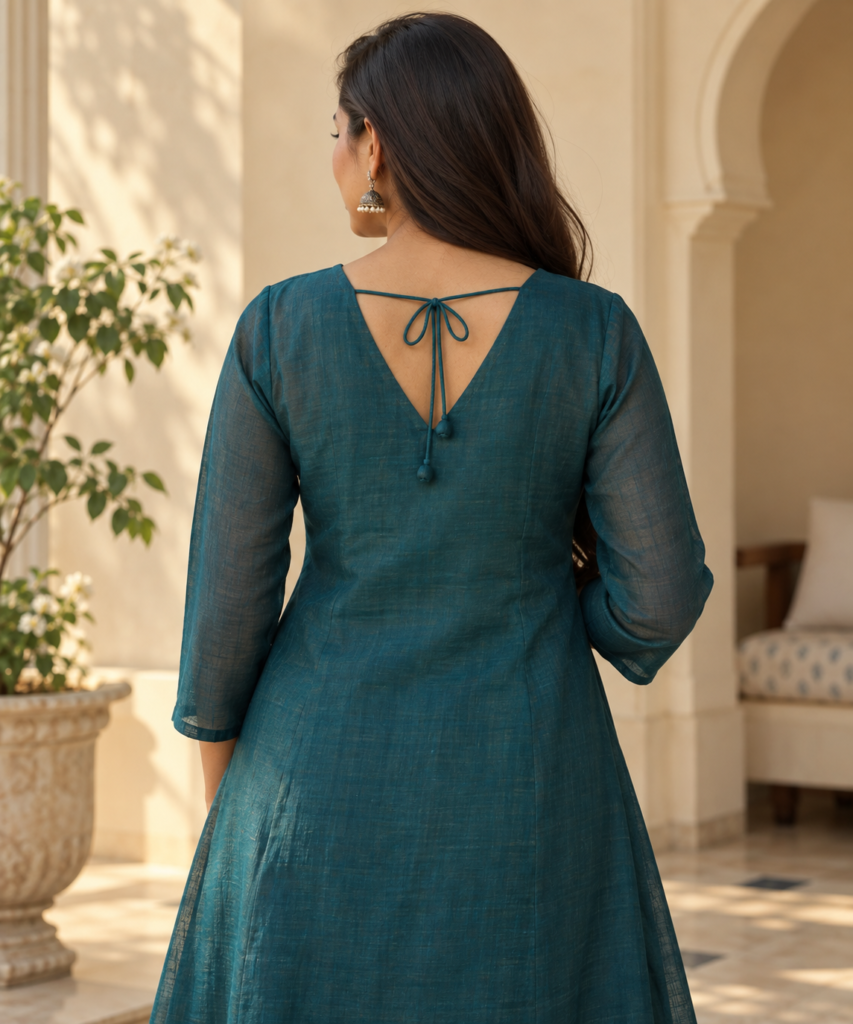
Dori backs are everywhere and that’s precisely why I wouldn’t try to reinvent the dori itself.
I’d edit it.
Instead of a very deep V with multiple strings and heavy latkans, use a moderate narrow V with one fine dori across the upper back.
Dori backs can already range from a single tie to elaborate criss-cross arrangements with decorative tassels. Current cotton kurtis also use small keyhole-and-dori combinations for relatively subtle everyday backs.
For our version, the dori is there to finish the neckline; not dominate it.
Best for: A-line kurtis, Anarkalis and occasion kurtas
Try it in: Chanderi, cotton-silk, georgette or rayon
Coverage: Medium
Bra-friendly: Depends on the depth and placement of the V
What to tell your tailor: Ask for a moderate V rather than a plunging one, with one slim self-fabric dori placed across the upper back.
Keep it elegant: Finish the dori with tiny fabric knots or miniature potli ends instead of oversized latkans.
5. Lotus Cutout
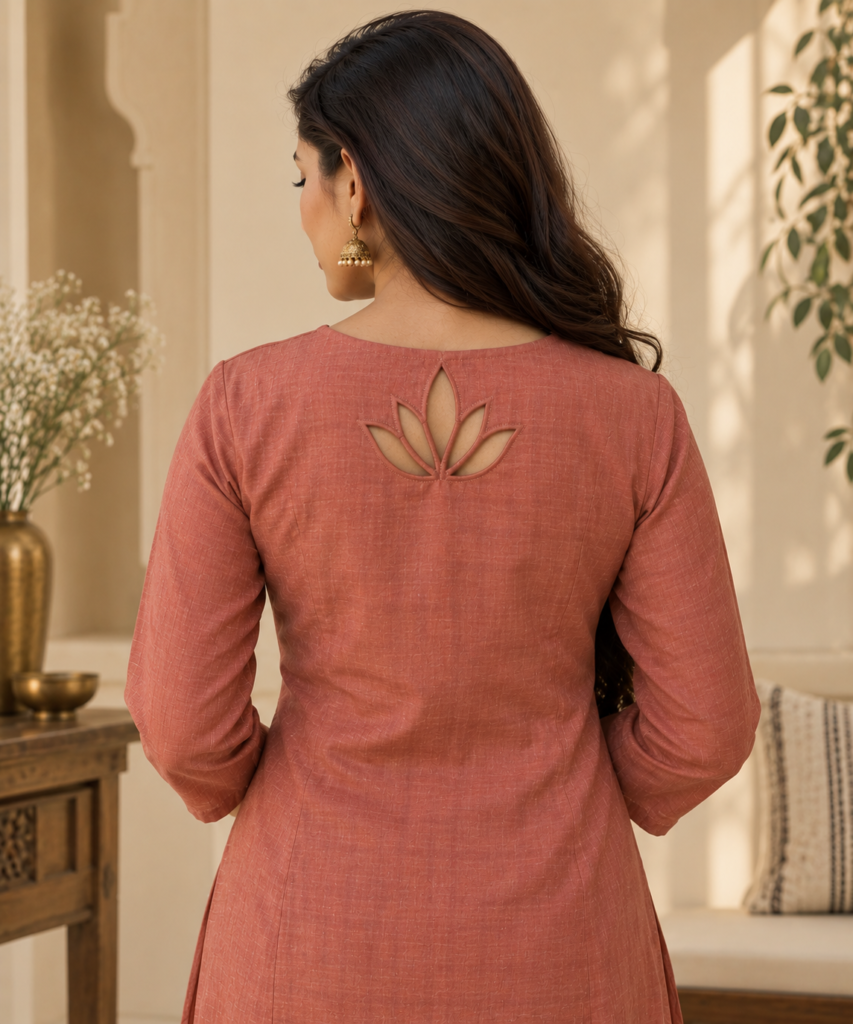
This is where we start moving away from the usual Pinterest lineup.
Instead of the familiar circle, diamond or large keyhole, create one small lotus-shaped opening beneath a high back neckline.
Leaf-shaped backs do appear in existing kurti inspiration, so the basic idea is wearable rather than purely conceptual. Our interpretation keeps the shape much smaller and cleaner.
Best for: Straight kurtis, short kurtis and minimal festive styles
Try it in: Cotton-silk, Chanderi, linen blends or raw silk
Coverage: High
Bra-friendly: Usually, when the cutout stays high
What to tell your tailor: Show the exact reference image. Ask for one symmetrical petal opening below a covered neckline with cleanly finished edges.
Keep it elegant: Don’t outline the entire petal in stones or beads. If you want definition, use subtle piping in the same fabric.
6. Three-Pleat High Back
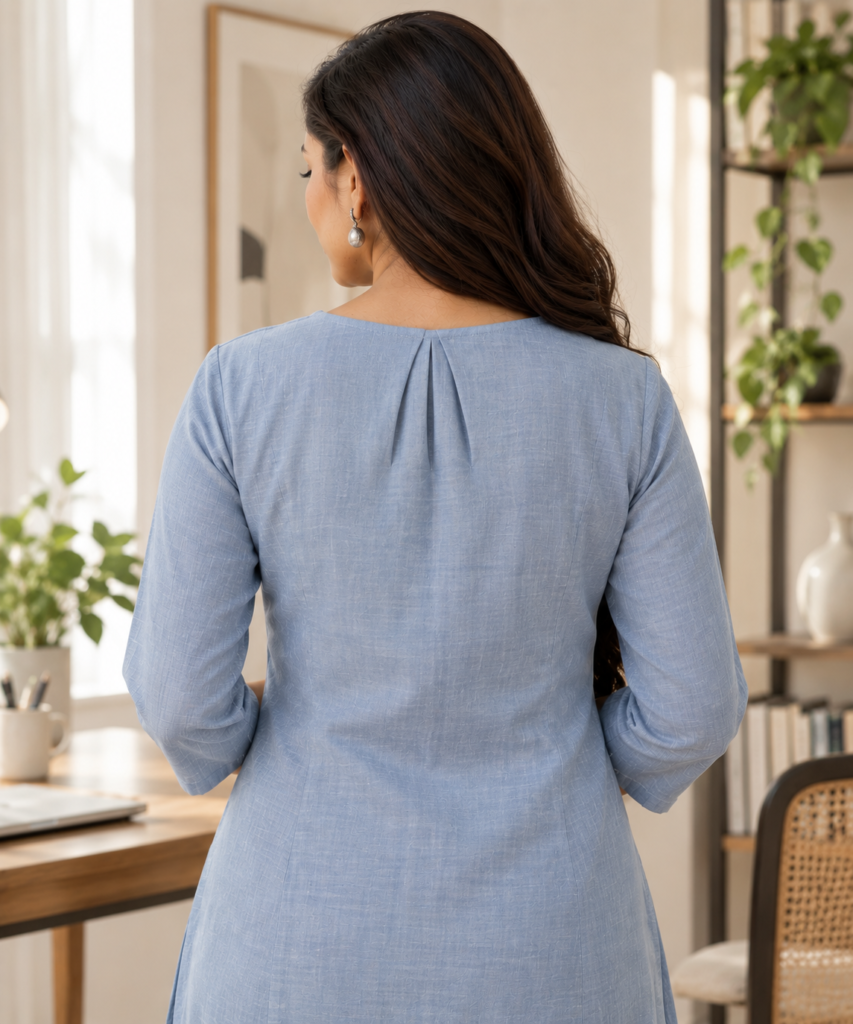
This may be my favorite design in the entire collection because it challenges the idea that a stylish back needs to reveal skin.
The neckline stays high and completely covered.
Directly beneath it, three small stitched pleats fan gently downward, creating texture and structure.
That’s it.
It works particularly well when the front of the kurti is already printed or embroidered and you want the back to have detail without competing with it.
Best for: Office kurtis, everyday straight kurtas and A-line kurtis
Try it in: Cotton, linen, cotton-silk or other fabrics that can hold a neat pleat
Coverage: Full
Bra-friendly: Yes
What to tell your tailor: Ask for three short, symmetrical stitched pleats beginning at the center-back neckline. They should create subtle structure rather than opening into large folds.
Keep it elegant: Don’t place buttons between the pleats. The construction itself is the feature.
7. Offset Button Back
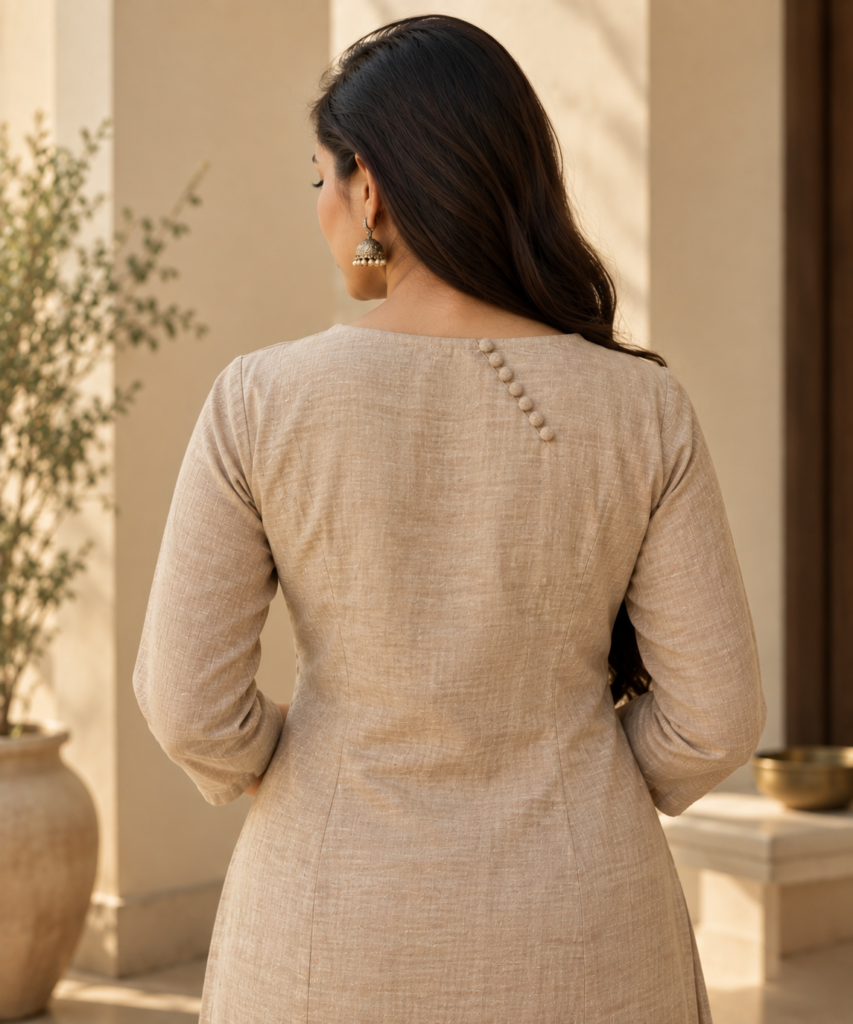
Rows of buttons normally run straight down the center.
So move them.
For this stylish kurti back design, a short line of small buttons begins near the center neckline and travels subtly off-center.
It’s not dramatically diagonal. The shift should be just enough to make someone look twice.
Button plackets are already used as a structured back-neck treatment. Changing the alignment gives the familiar detail a more contemporary feel.
Best for: Short kurtis, straight kurtas and fusion styles
Try it in: Linen, cotton, cotton-silk or textured handloom fabric
Coverage: Full
Bra-friendly: Yes
What to tell your tailor: Ask for a short decorative button trail positioned slightly to one side of the center-back seam. Bring a visual reference, the placement is what makes this design work.
Keep it elegant: Use tonal buttons. Bright contrast buttons plus an unusual placement can quickly make the design feel busy.
8. Tone-on-Tone Embroidered Back Yoke
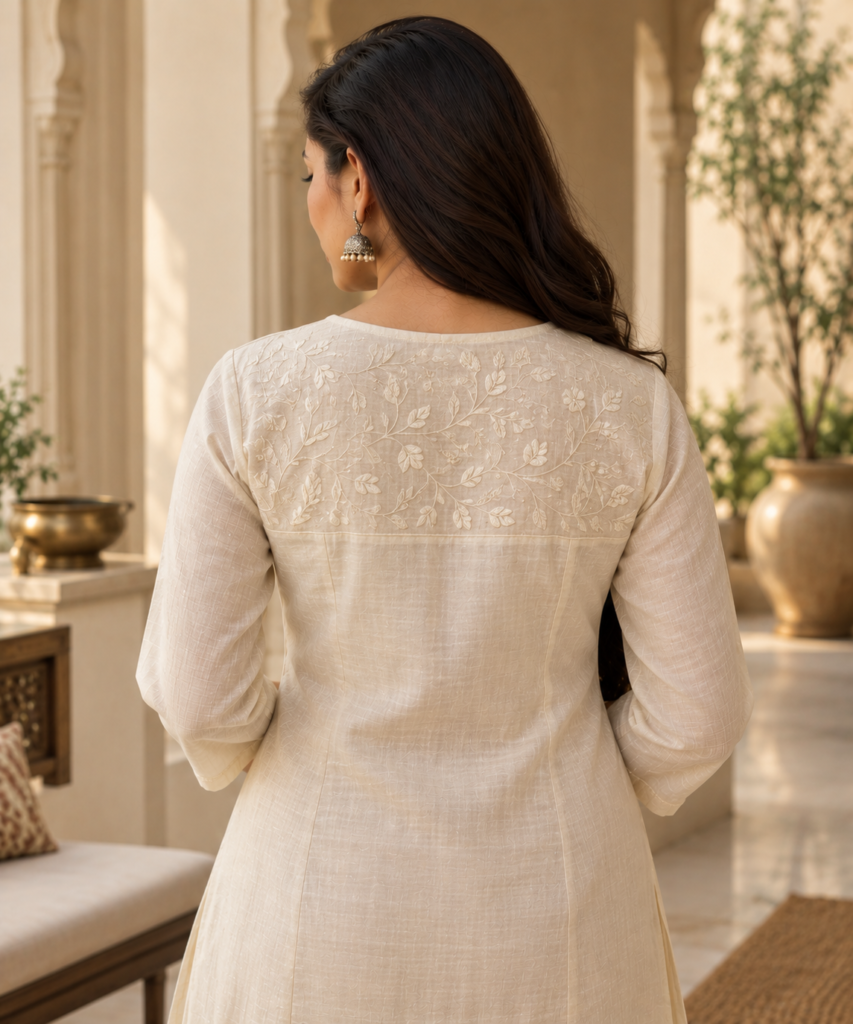
If you don’t want a cutout at all, embroidery can create the focal point.
But instead of covering the back in contrasting thread, mirror work and embellishments, keep the embroidery the same color as the fabric.
Picture an ivory kurti with ivory vine embroidery across the upper back, or sage green with slightly darker sage thread.
The texture becomes noticeable when the light hits it rather than shouting from across the room.
Best for: Festive kurtis, Chanderi kurtas and elevated everyday styles
Try it in: Chanderi, cotton-silk, linen, silk blends
Coverage: Full
Bra-friendly: Yes
What to tell your tailor or embroiderer: Keep the motif concentrated across the upper-back yoke and use tonal thread. A simple vine, leaf or small geometric motif is enough.
Keep it elegant: Choose either tonal embroidery or heavy embellishment. This design works because the contrast is deliberately low.
9. Asymmetric Notch Back
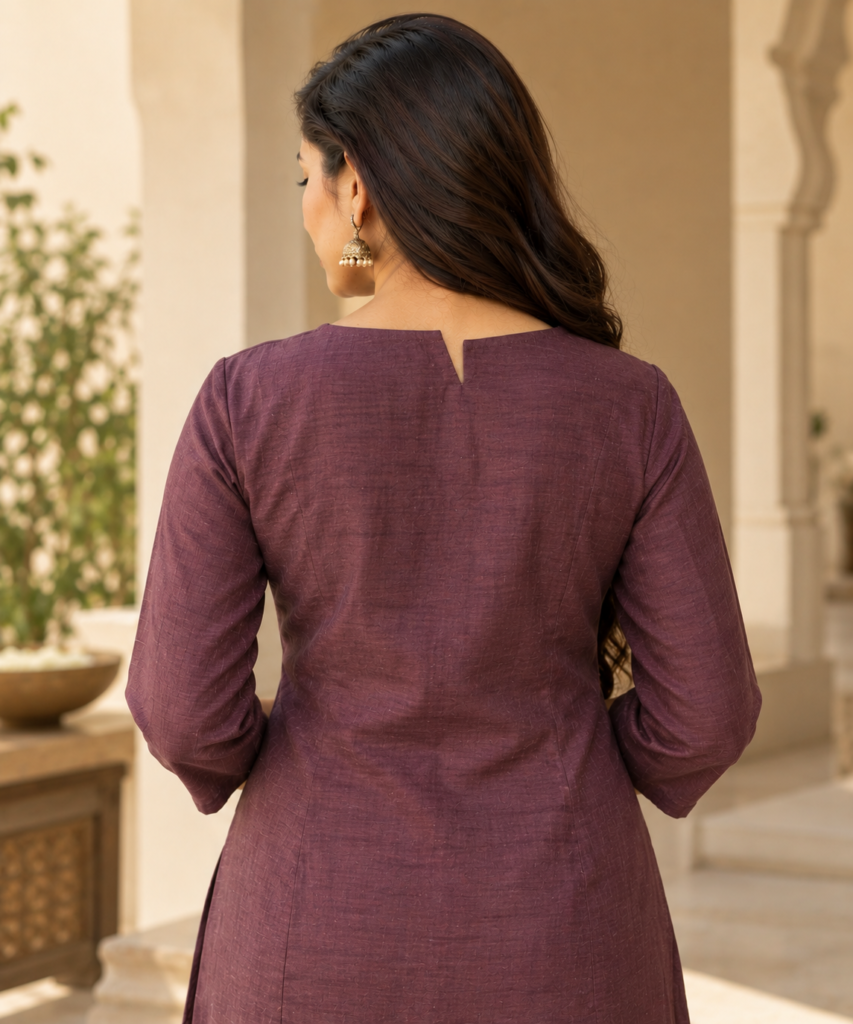
The final design is the most contemporary of the nine.
Instead of a conventional U, V or square neckline, start with a relatively high back and introduce one small asymmetric notch to one side.
The important word is small.
This shouldn’t look like half the neckline has accidentally disappeared. Think of it as a subtle interruption in an otherwise clean line.
Asymmetric and geometric back treatments already appear in ethnic-wear design inspiration, although they’re often executed as much larger statement cutouts. We’re taking the same idea and making it much more wearable.
Best for: Short kurtis, fusion kurtas and contemporary straight styles
Try it in: Linen, crisp cotton, raw silk or cotton-silk
Coverage: High
Bra-friendly: Yes, if the notch remains shallow
What to tell your tailor: A reference image is essential here. Ask for a high back neckline with one shallow angular notch positioned slightly off-center.
Keep it elegant: No piping, buttons or tassels are necessary. The cut is the design.
Which Kurti Back Design Should You Choose?
If you’re saving ten different back neck designs for kurtis and can’t decide which one to send your tailor, start with the kurti itself.
A plain cotton kurti can carry a little construction detail beautifully. Try the soft square with contrast piping, three-pleat back or mini keyhole.
For printed cotton, I would simplify further. A small keyhole or potli-button detail is less likely to compete with the print.
Chanderi, silk and cotton-silk can carry more refined detailing, making the potli-button spine, narrow V with dori or tonal embroidered yoke particularly interesting options.
For workwear, consider three pleats, a shallow square back, tonal buttons or another high-coverage design.
And if you’re having a short or fusion kurti stitched, that’s where I’d experiment with the offset buttons or asymmetric notch.
Fabric matters too. Crisp fabrics generally hold geometric lines and structured details more clearly, while fluid fabrics may behave differently once cut and stitched. A tailoring source we reviewed similarly notes that fabric choice affects which back treatments work well.
When in doubt, show your tailor the reference and ask whether your chosen fabric can hold the shape cleanly.
Before You Show a Kurti Back Design to Your Tailor
A Pinterest picture is inspiration, not a pattern.
Two women can show a tailor the exact same photograph and still need different construction.
Before stitching, discuss how much back coverage you want, where your bra band and straps sit, whether the closure needs to be functional, and how the fabric behaves.
This is particularly important with square necklines, keyholes and geometric cutouts. Clean finishing and reinforcement help these shapes hold their intended lines; tailoring guidance for structured back designs similarly emphasizes reinforcement and accurate construction to prevent issues such as stretching or gaping.
And don’t be afraid to tell your tailor:
“I want this idea, but simpler.”
Removing two details can sometimes improve a design more than adding another one.
Frequently Asked Questions
Which kurti back designs look the most elegant?
Small keyholes, shallow square backs, tonal potli buttons, restrained dori backs and subtle embroidered yokes can all create an elegant finish. Rather than choosing by trend alone, consider the kurti’s fabric, print, occasion and the amount of coverage you prefer.
Which simple kurti back design is best for everyday wear?
For everyday cotton kurtis, consider a mini keyhole, shallow square neckline with piping, small button detail or completely covered pleated back. These add interest without requiring an elaborate back.
Which kurti back designs are suitable for office wear?
High-coverage designs tend to be easiest to adapt for workwear. The three-pleat high back, five-potli button back, shallow square back and tonal embroidered yoke are good starting points. Adjust the final neckline and fit to your workplace and personal comfort.
Which kurti back design can I wear with a regular bra?
Completely covered designs such as the pleated back, embroidered yoke and button backs are generally easiest. Small high-positioned keyholes can also work, but the exact placement matters. Take the bra you plan to wear into account when your tailor marks the back.
Are dori back designs only for party-wear kurtis?
No. A single fine dori can be quite understated. Current cotton kurtis also use simple dori closures with small back openings for casual and everyday styling. The overall effect depends on the neckline depth, number of strings and size of the tassels.
How do I explain a back neck design to my tailor?
Save a clear back-view reference and point out the specific elements you want rather than simply saying “make this.” Discuss the neckline shape, coverage, closure, piping or buttons and anything you don’t want added. Your tailor can then adapt the inspiration to your measurements and fabric.
Final Thoughts
A beautiful kurti doesn’t need an elaborate back to feel special.
Sometimes it’s one potli button.
Sometimes it’s a clean square edged with piping.
Sometimes it’s three tiny pleats that you only notice when the wearer turns around.
That’s what I love about these kurti back designs: the details don’t have to fight for attention.
Save the design you like, show it to your tailor and adapt it to your fabric, fit and preferred coverage.
And if you’re stuck between adding one more embellishment and leaving the design alone?
Try leaving it alone first.
You might already have the detail that makes the kurti beautiful.