How to Repair a Damaged Skin Barrier: Signs, Causes, and What Actually Helps
If your skin suddenly feels tight, dry, rough, or uncomfortable, your skin barrier may need extra care. You may also notice that products you once used without a problem now feel irritating.
Learning how to repair a damaged skin barrier starts with understanding what may have caused the problem. In many cases, a simpler skincare routine and gentler habits can help your skin feel more comfortable again.
The goal is not to add more products. It is often more helpful to remove unnecessary steps and give your skin time to recover.
What Is the Skin Barrier?
The skin barrier is the outer layer of your skin. Its job is to help hold in moisture while protecting the skin from everyday outside factors such as weather, dirt, and pollution.
A healthy skin barrier usually feels comfortable and balanced. When it becomes stressed, your skin may lose moisture more easily and feel more sensitive than usual.
This is why skin barrier repair is often focused on gentle cleansing, regular moisturizing, and avoiding anything that makes the skin feel uncomfortable.
You do not need a complicated routine to support your skin. In many cases, keeping things simple is the best place to start.
Signs of a Damaged Skin Barrier
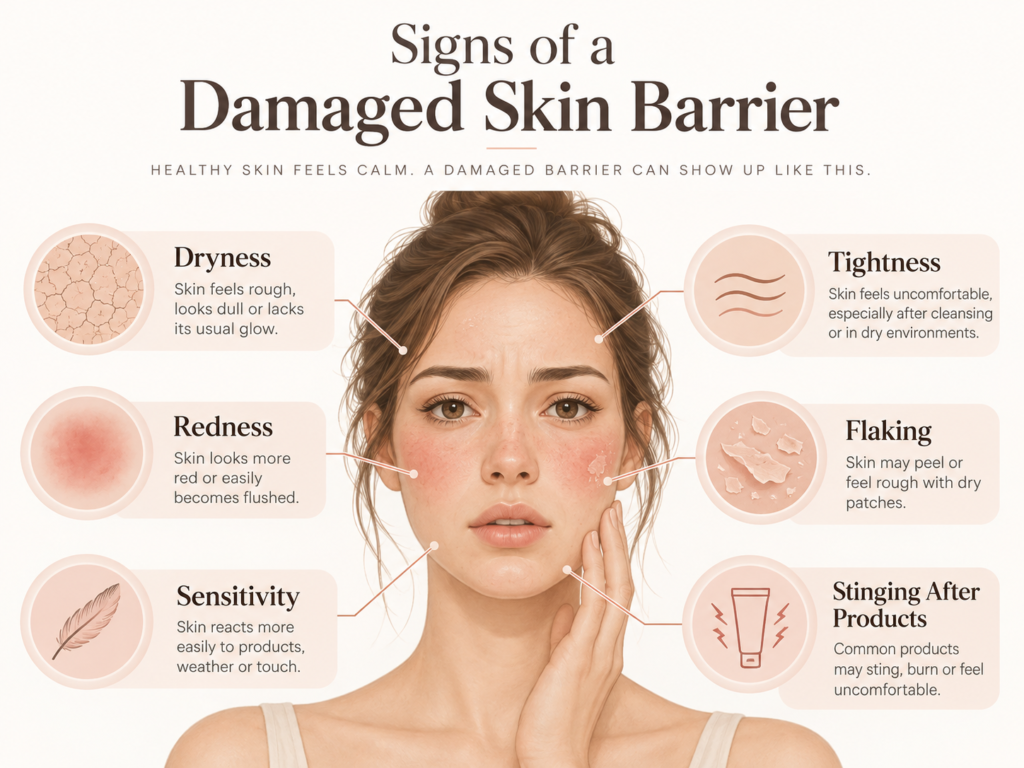
The signs of a damaged skin barrier can vary from person to person. Some people notice only mild dryness, while others experience several changes at the same time.
Common signs may include:
Skin Feels Tight After Washing
Your face may feel stretched or uncomfortable shortly after cleansing. This can happen when your routine removes too much of the natural moisture from your skin.
Products Suddenly Feel Uncomfortable
A moisturizer, serum, or cleanser that once felt fine may suddenly cause a stinging or uncomfortable feeling.
This change can be one of the noticeable damaged skin barrier signs.
Dry or Flaky Areas Appear
Your skin may develop rough patches or visible flakes. Makeup can also sit unevenly on the skin when this happens.
Skin Looks Red or Feels Sensitive
You may notice that your skin becomes more reactive to weather, cleansing, or certain products.
Your Skin Feels Dry but Also Looks Oily
Sometimes skin can feel dry underneath while appearing shiny on the surface. This may happen when your skincare routine is no longer keeping your skin comfortable and balanced.
Breakouts Appear With Irritation
Breakouts can happen for many reasons. However, if they appear together with dryness, tightness, or sensitivity, it may be worth reviewing your skincare routine.
These skin barrier damage symptoms do not always mean the same thing for everyone. If your skin stays uncomfortable or gets worse, professional advice may be helpful.
What Causes a Damaged Skin Barrier?
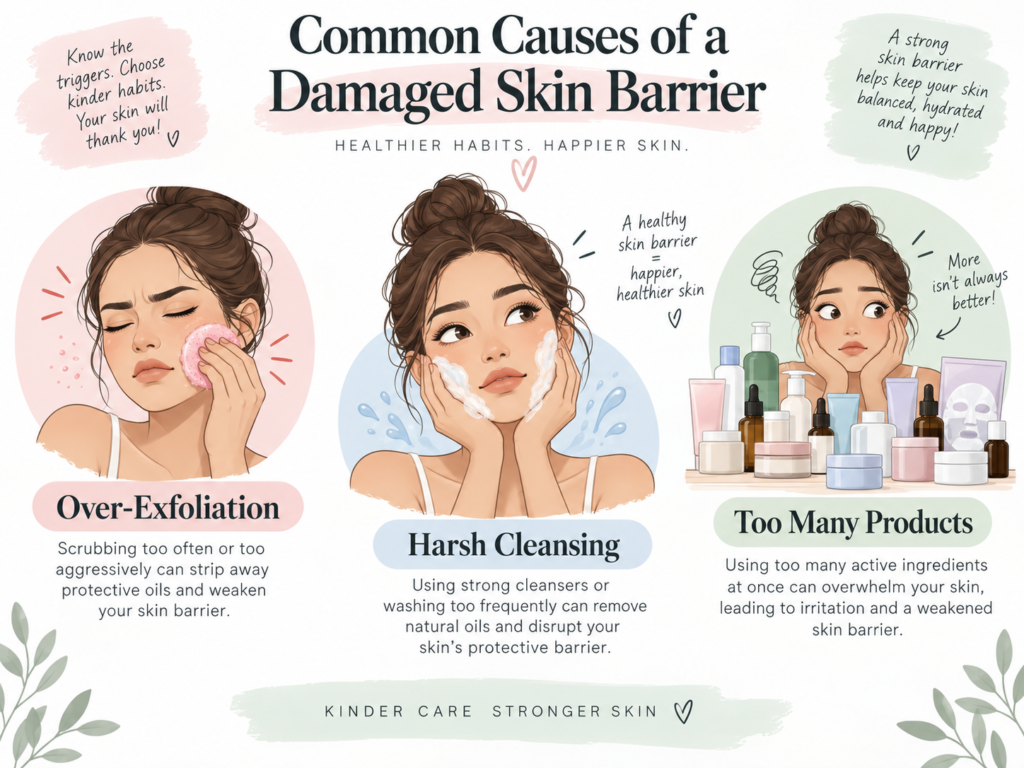
Understanding damaged skin barrier causes can help you avoid repeating the same habits.
Using Too Many Products
A long skincare routine is not always better. Using several strong products at once can sometimes leave the skin feeling overwhelmed.
Introducing one product at a time can make it easier to understand how your skin responds.
Over-Exfoliating
Exfoliation can help remove surface buildup, but doing it too often may leave the skin feeling dry or sensitive.
An over exfoliated skin barrier may feel tight, rough, or uncomfortable.
This can happen when scrubs, peeling products, or exfoliating liquids are used more often than your skin can comfortably handle.
Washing Too Often
Cleansing several times a day may remove more moisture than necessary.
A gentle cleanser is usually enough for regular daily cleansing.
Using Very Hot Water
Hot water can leave skin feeling dry and tight.
Lukewarm water is generally a gentler option when washing your face.
Changing Products Too Frequently
It can be tempting to try every new skincare product. However, changing your routine too often can make it difficult to know what is helping and what is causing irritation.
Weather Changes
Cold weather, dry air, wind, and indoor heating can all make skin feel less comfortable.
Your routine may need to change slightly with the seasons.
How to Repair a Damaged Skin Barrier
You do not need a shelf full of products to start improving your routine.
Here are some simple steps that can help when you are working on how to fix a damaged skin barrier.
1. Simplify Your Routine
Start by reducing your routine to the basics.
A simple routine may include:
- A gentle cleanser
- A moisturizer
- Sunscreen during the day
Avoid adding several new products while your skin feels sensitive.
This approach makes it easier to see how your skin responds over time.
2. Take a Break From Harsh Products
If exfoliating products, scrubs, or strong treatments make your skin feel uncomfortable, consider using them less often.
Give your skin a chance to settle before adding them back into your routine.
If you use a product recommended by a healthcare professional, check with them before making major changes.
3. Choose a Gentle Cleanser
A gentle cleanser for damaged skin barrier care should leave your face feeling clean without making it feel tight afterward.
Look for simple formulas made for dry or sensitive skin.
Avoid scrubbing your face during cleansing. Use your fingertips and rinse with lukewarm water.
4. Moisturize Regularly
Moisturizer is one of the most useful steps in a simple skin barrier repair routine.
It helps reduce dryness and makes the skin feel softer and more comfortable.
Apply moisturizer after cleansing while the skin is still slightly damp. This can help keep moisture from disappearing too quickly.
5. Protect Your Skin During the Day
Sun exposure can make already-sensitive skin feel more uncomfortable.
Using sunscreen regularly can help protect your skin while you work on improving your routine.
Choose a product that feels comfortable on your skin and fits easily into your morning routine.
Best Ingredients for Skin Barrier Repair
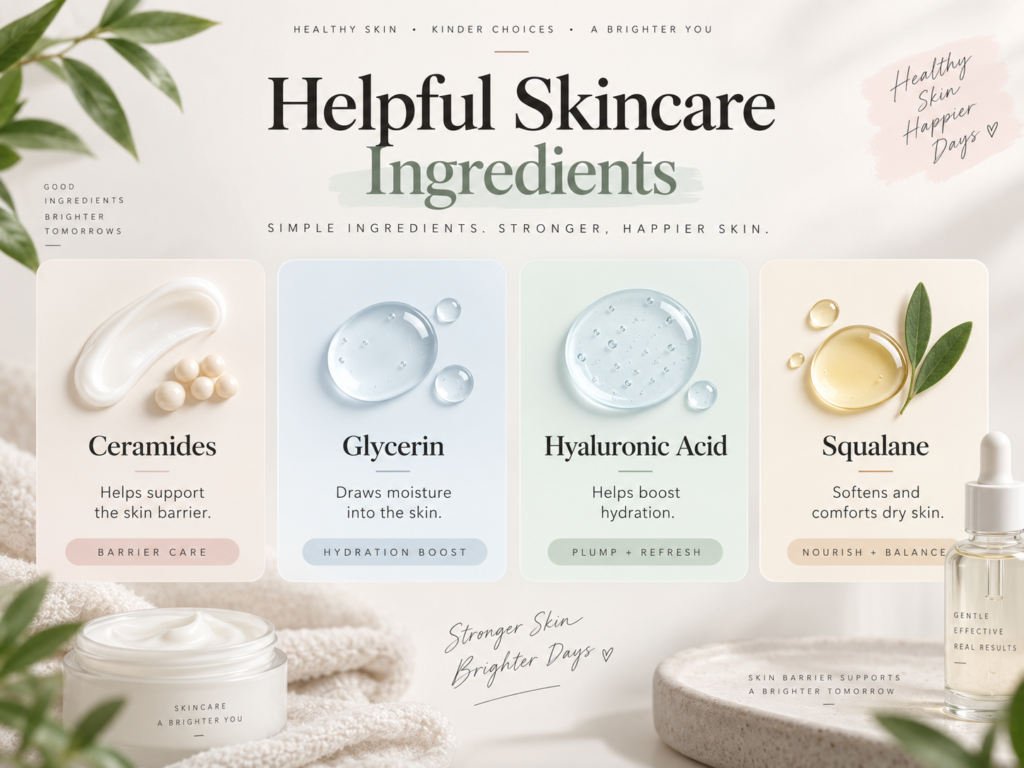
You do not need to memorize a long list of ingredients. A few simple ones are commonly found in gentle moisturizers and can support comfortable skin.
Ceramides
Ceramides are naturally present in the outer layer of the skin.
Products containing them are often used as part of a simple moisturizing routine.
People searching for ceramides for skin barrier support will often find them in creams designed for dry or sensitive skin.
Glycerin
Glycerin helps attract moisture and is commonly found in cleansers, creams, and lotions.
It can be useful when skin feels dry or tight.
Hyaluronic Acid
Hyaluronic acid helps attract water to the skin.
It is often used in lightweight hydrating products.
It works best when followed by a moisturizer that helps keep the skin comfortable.
Petrolatum
Petrolatum forms a protective layer over the skin and can help reduce moisture loss.
Some people use a small amount on very dry areas, especially at night.
Squalane
Squalane is a lightweight ingredient that helps soften the skin.
It can be a good option for people who prefer a less heavy texture.
When choosing the best ingredients for skin barrier repair, focus on how comfortable the product feels rather than buying something because it contains the longest ingredient list.
What to Avoid With a Damaged Skin Barrier
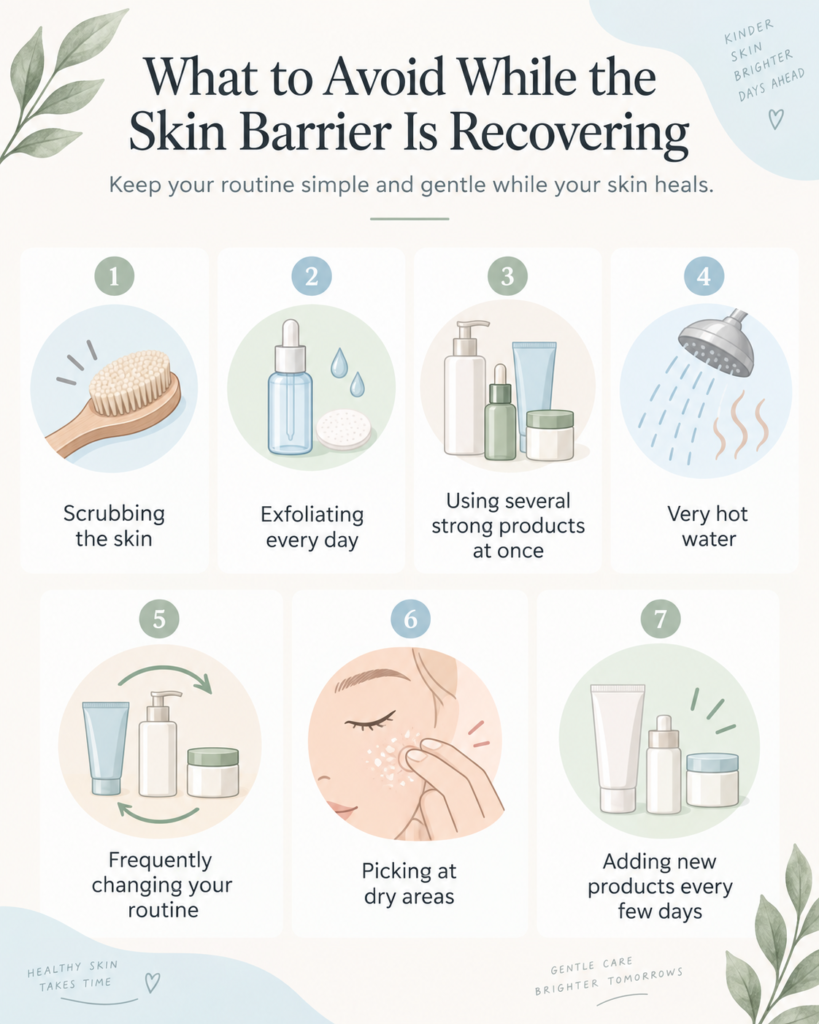
Knowing what to avoid with damaged skin barrier concerns can be just as important as knowing what to use.
Try to avoid the following while your skin feels sensitive:
- Scrubbing the skin
- Exfoliating every day
- Using several strong products at once
- Very hot water
- Frequently changing your routine
- Picking at dry areas
- Adding new products every few days
The simpler your routine is, the easier it becomes to notice what your skin responds to well.
A Simple Skin Barrier Repair Routine
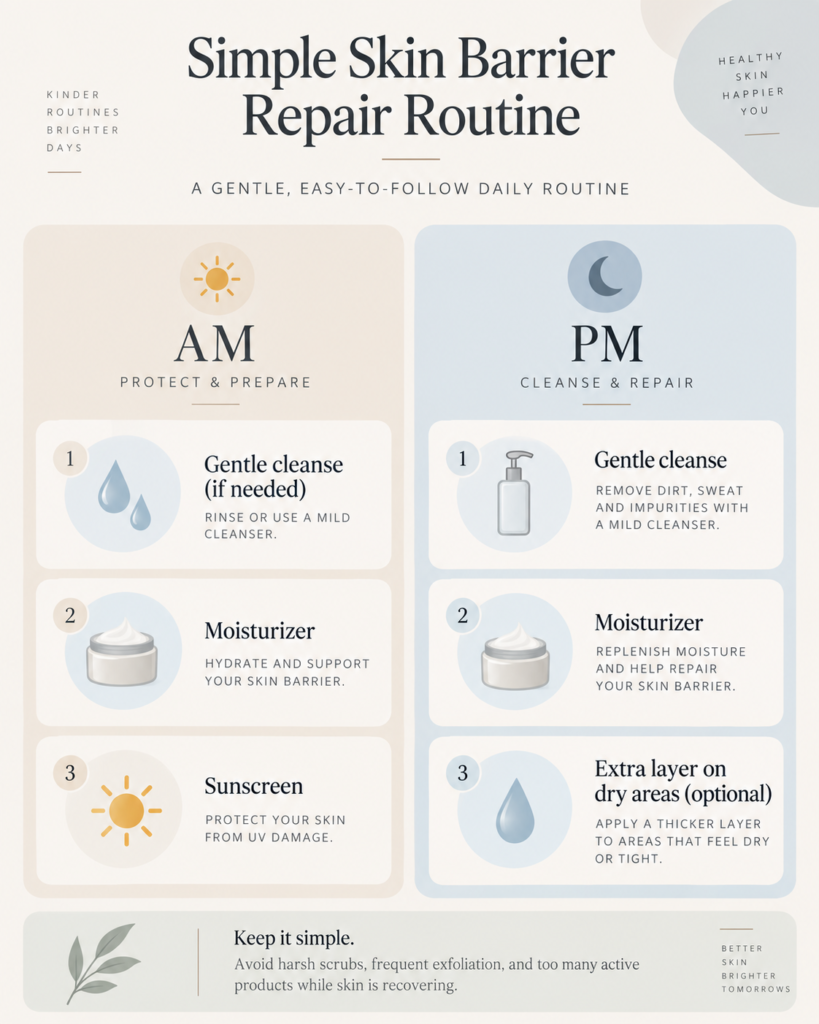
If you are looking for the best skincare routine for damaged skin barrier concerns, simple is usually a good place to begin.
Morning
Gently cleanse your face if needed.
Apply moisturizer.
Finish with sunscreen.
Evening
Cleanse gently to remove makeup, sunscreen, and daily buildup.
Apply moisturizer.
Use an extra layer of moisturizer on areas that feel especially dry.
This type of routine is easy to follow and avoids adding unnecessary steps.
How Long Does a Damaged Skin Barrier Take to Heal?
There is no single answer to how long does damaged skin barrier take to heal because every person’s skin and routine are different.
Minor dryness or sensitivity may begin feeling better after you simplify your routine. More noticeable irritation can take longer.
The important thing is to look for gradual improvement rather than expecting overnight changes.
Try not to keep switching products while waiting for your skin to improve. Consistency makes it easier to understand whether your routine is helping.
Signs Your Skin Barrier Is Healing
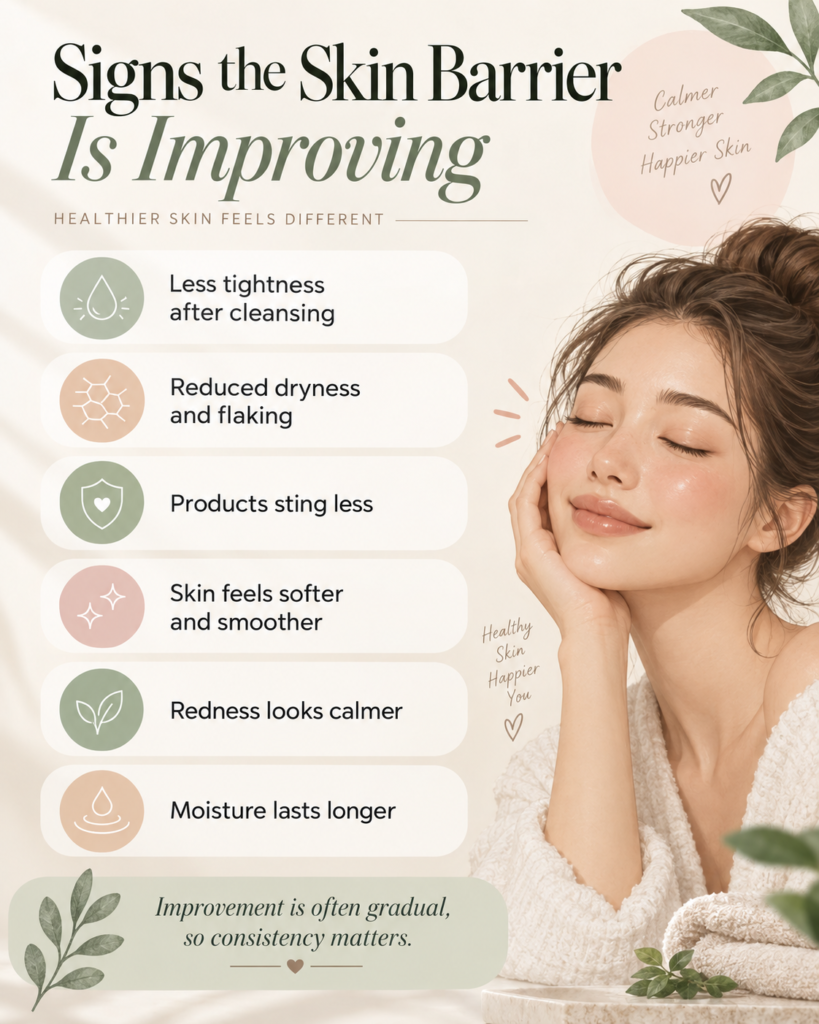
It can be useful to look for small changes rather than expecting your skin to suddenly feel completely different.
Common signs your skin barrier is healing may include:
- Less tightness after cleansing
- Reduced dryness
- Fewer flaky areas
- Products feel more comfortable
- Skin feels softer
- Less frequent redness
- Moisturizer feels effective for longer
Improvement may happen gradually, so give your routine time.
When Can You Start Using Active Products Again?
Once your skin feels comfortable and your basic routine no longer causes sensitivity, you can consider slowly adding products back.
Start with one product instead of restarting several at the same time.
Use it less often at first and pay attention to how your skin responds.
If discomfort returns, reduce how often you use the product.
This approach can be helpful when deciding when to exfoliate after repairing skin barrier concerns.
Damaged Skin Barrier or Just Dry Skin?
Dry skin and a stressed skin barrier can feel similar, but they are not always the same.
Dry skin may simply need more moisture. A stressed barrier may also feel sensitive, tight, rough, or uncomfortable when products are applied.
If you have always had dry skin, you may need a richer moisturizer as part of your regular routine.
If the change happened suddenly, think about whether you recently started exfoliating more often, added a new product, or changed your cleansing habits.
When Should You Get Professional Advice?
A simple routine may help with mild dryness or sensitivity, but not every skin concern should be treated as barrier damage.
Consider speaking with a qualified professional if your skin becomes very uncomfortable, continues getting worse, or does not improve after simplifying your routine.
You should also seek advice if you notice unusual swelling, severe discomfort, or other changes that concern you.
Frequently Asked Questions
Can a damaged skin barrier repair itself?
Skin naturally renews over time. A gentle routine and fewer irritating products can support this process.
Can over-exfoliation damage the skin barrier?
Using exfoliating products too often can leave skin feeling dry, tight, or sensitive.
Is hyaluronic acid good for a damaged skin barrier?
Hyaluronic acid can help add hydration to a skincare routine. Follow it with moisturizer to help keep the skin comfortable.
Should I stop exfoliating when my skin feels irritated?
If exfoliation makes your skin feel uncomfortable, reducing or pausing it may help while your skin settles.
What is the best moisturizer for damaged skin barrier care?
Look for a simple moisturizer made for dry or sensitive skin. Products with ingredients such as ceramides, glycerin, or squalane may be useful options.
How do I know if my skin barrier is repaired?
Your skin may feel less tight, dry, and sensitive. Products that previously felt uncomfortable may also become easier to use.
Keep Skin Barrier Care Simple
Repairing a stressed skin barrier does not need to involve a complicated routine.
Gentle cleansing, regular moisturizing, sun protection, and fewer irritating products can create a much calmer approach to skincare.
The key is consistency. Give your skin time, avoid constantly changing products, and pay attention to how it feels.
When your routine becomes simpler and more comfortable, your skin has a better chance to return to a balanced state.