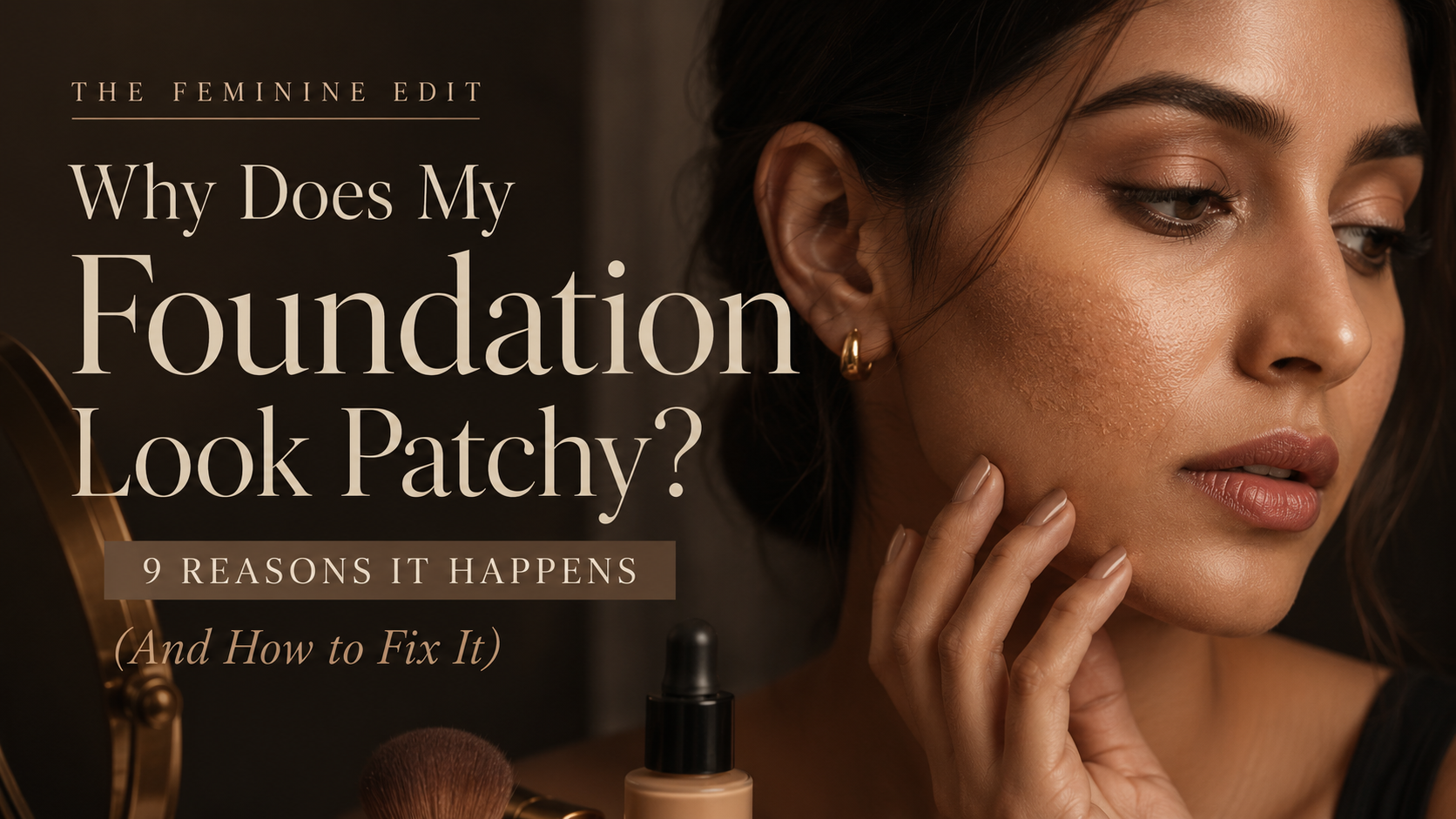
Why Does My Foundation Look Patchy? 9 Reasons It Happens (And How to Fix It)
Foundation usually looks patchy because of dry skin, dead skin buildup, incompatible skincare, applying too much product, or using the wrong application technique. In most cases, improving your skin prep, applying thinner layers, and allowing your skincare to absorb fully can solve the problem without changing your foundation.
One of the biggest misconceptions in makeup is believing that a better foundation will automatically give you smoother results. In reality, even premium foundations can look patchy if the skin underneath isn’t properly prepared. Understanding why it happens is the first step toward fixing it for good.
Whether you’re getting ready for work, a wedding, brunch with friends, or simply want your makeup to stay fresh throughout a busy day, this guide will help you identify the real causes of patchy foundation and show you practical ways to prevent it.
If your makeup also fades, becomes oily, or starts looking dull after a few hours, you may also find our guide on Why Does My Makeup Look Worse After Two Hours? (And How to Fix It) helpful.
What Does “Patchy Foundation” Actually Mean?
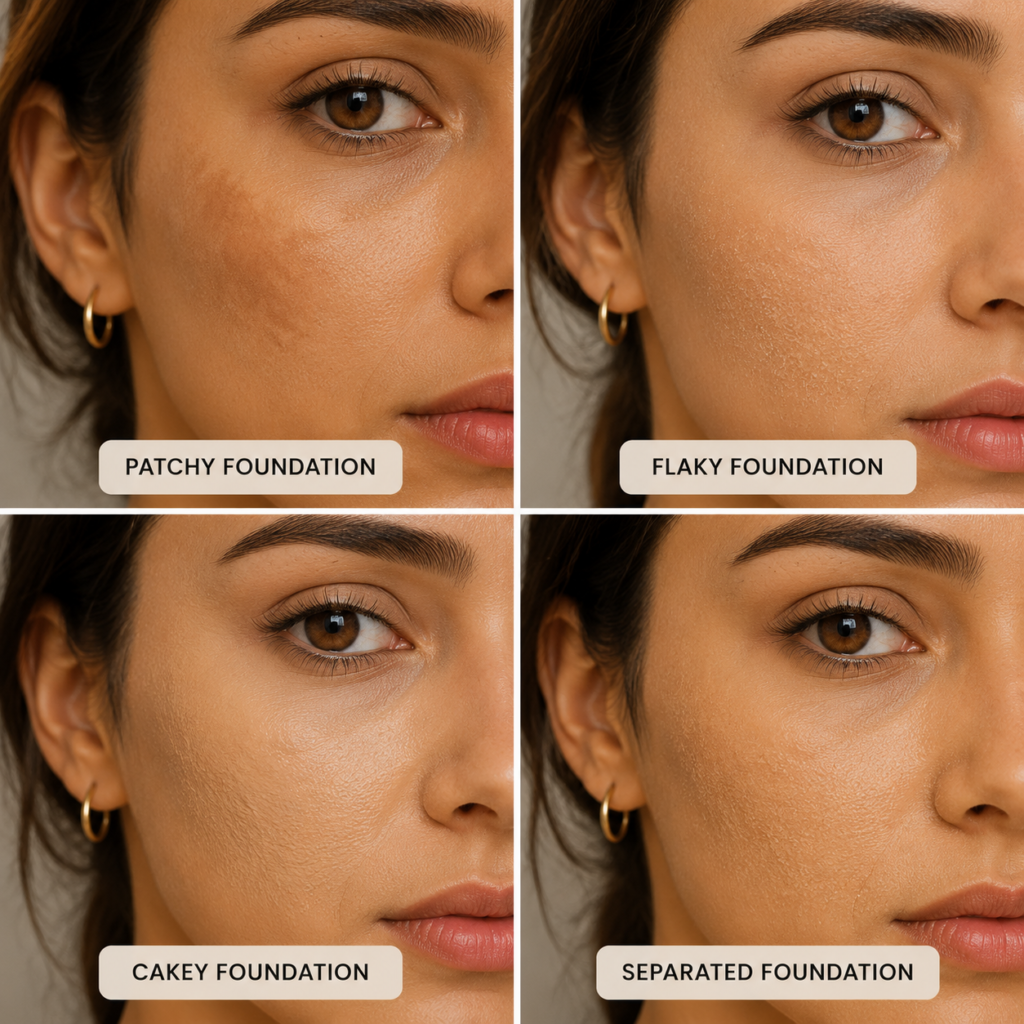
Many people use the term patchy foundation to describe different makeup problems, but they’re not all the same.
Here’s a quick way to identify what’s happening:
- Patchy foundation: Some areas look smooth while others have little or no coverage.
- Flaky foundation: Foundation clings to dry skin, making flakes more visible.
- Cakey foundation: Makeup looks thick, heavy, or sits on top of the skin.
- Separated foundation: Foundation starts breaking apart, especially around the nose, chin, or forehead.
Most people don’t notice this, but identifying the exact problem makes it much easier to fix. A solution that works for cakey makeup won’t necessarily solve patchiness.
| Problem | How It Looks | Most Common Cause |
| Patchy | Uneven coverage | Dry skin, layering issues |
| Flaky | Makeup clings to skin | Dehydration, dead skin |
| Cakey | Thick and heavy | Too much product |
| Separated | Makeup breaks apart | Oil, incompatible products |
Signs Your Foundation Is Looking Patchy
You may be dealing with patchy foundation if:
- Coverage disappears in certain areas.
- Makeup gathers around your nose.
- Dry patches become more visible after foundation.
- Your foundation looks uneven in daylight.
- Blending makes the problem worse instead of better.
Why Does My Foundation Look Patchy? 9 Common Reasons
1. Your Skin Is Dry (Even If It Doesn’t Feel Dry)
Dry skin is one of the most common reasons foundation refuses to blend evenly.
Foundation naturally settles into rough or dehydrated areas, making those spots appear darker, flaky, or uneven.
From my experience, dryness is often more noticeable around the nose, mouth, and between the eyebrows. This is true even for people who think they have oily skin.
How to Fix It
- Cleanse your face gently.
- Apply moisturizer suited to your skin type.
- Give it a few minutes to absorb before applying foundation.
Don’t Do This
Don’t apply foundation immediately after moisturizer. If the moisturizer hasn’t settled, your foundation can slide around instead of blending smoothly.
2. You’re Skipping Gentle Exfoliation
Dead skin cells create an uneven surface that foundation struggles to grip.
Instead of sitting evenly, makeup catches on rough patches.
In reality, this becomes especially noticeable under natural daylight, where texture is much easier to see than under indoor lighting.
How to Fix It
Include gentle exfoliation in your skincare routine a couple of times a week, depending on your skin’s needs. This helps create a smoother surface for makeup.
Don’t Do This
Avoid exfoliating aggressively right before applying makeup. Over-exfoliation can leave skin irritated and make foundation look even worse.
3. Your Skincare Products Haven’t Fully Absorbed
This mistake is surprisingly common.
If you layer foundation over wet skincare, the products can mix and prevent the foundation from setting properly.
Instead of adhering to your skin, it begins moving around.
How to Fix It
After applying skincare:
- Wait a few minutes.
- Let your skin feel comfortable rather than sticky.
- Then begin makeup.
That short waiting time often makes a noticeable difference in how evenly foundation applies.
Don’t Do This
Don’t rush your routine because you’re running late. Applying foundation onto damp skincare often creates more work later.
4. You’re Using Too Much Foundation
Many people think extra product equals extra coverage.
Actually, the opposite often happens.
Thick layers are harder to blend and more likely to separate throughout the day.
Most people don’t notice this, but adding a second thin layer only where needed usually looks far more natural than applying one heavy layer across the entire face.
How to Fix It
Start with a small amount.
Build coverage gradually only in areas that need it.
Don’t Do This
Don’t keep adding foundation every time you see a small imperfection. Spot-concealing usually gives a cleaner finish.
5. Your Primer and Foundation Don’t Work Well Together
Many primers and foundations use different base ingredients. When incompatible formulas are layered, they may not bond properly..
The result?
Foundation pills, separates, or becomes patchy.
How to Fix It
If you notice consistent patchiness after changing either your primer or foundation, try using them separately for a few days to identify which combination is causing the issue.
Small changes in your routine can sometimes solve a problem you’ve been blaming on your foundation for months.
Don’t Do This
Don’t assume the newest primer will automatically improve your makeup. Compatibility matters more than popularity.
6. You’re Using the Wrong Application Technique
The way you apply foundation affects the final finish just as much as the formula itself.
Dragging foundation across the face can create streaks and uneven coverage.
How to Fix It
Use light pressing or tapping motions instead of rubbing the product into your skin.
Build coverage slowly.
Don’t Do This
Avoid constantly going back over areas that have already started drying. It can lift the product and create patchiness.
7. Your Skin Prep Doesn’t Match Your Skin Type
Skin preparation isn’t one-size-fits-all.
For example:
- Oily skin often needs lightweight hydration.
- Dry skin usually benefits from richer hydration.
- Combination skin may need different prep in different areas.
Treating your entire face exactly the same rarely gives the best makeup result.
How to Fix It
Adjust your skincare according to your skin type rather than copying someone else’s routine.
Don’t Do This
Don’t overload oily areas with heavy creams if they already produce excess oil.
8. You’re Layering Products Too Quickly
Foundation needs a stable surface.
Applying multiple products one after another without allowing them to settle can disturb the layer underneath.
How to Fix It
Slow down slightly between steps.
Even waiting a minute can improve the finish.
Cause and effect are easy to notice here: when each layer has time to settle, the next layer blends more evenly instead of lifting what’s underneath.
Don’t Do This
Don’t keep touching your face while applying makeup. Fingers transfer oil and can disturb freshly applied foundation.
9. Your Foundation Simply Doesn’t Suit Your Skin
Sometimes the issue isn’t your technique.
Some foundations naturally perform better on certain skin types than others.
That’s why a foundation your friend loves may not work for you.
How to Fix It
Pay attention to how your skin behaves throughout the day.
If you’ve corrected your application technique but still experience patchiness every time, it may be worth trying a different formula.
Don’t Do This
Don’t judge a foundation after just one use. Try it with different skincare routines and application methods before deciding it isn’t suitable.
Does an Expensive Foundation Solve the Problem?
Not necessarily.
A premium foundation can’t compensate for poor skin preparation or incorrect application.
From what I have noticed, improving your skincare routine and application technique often creates a bigger difference than simply switching to a more expensive foundation.
That’s why professional makeup artists spend so much time preparing the skin before applying any makeup.
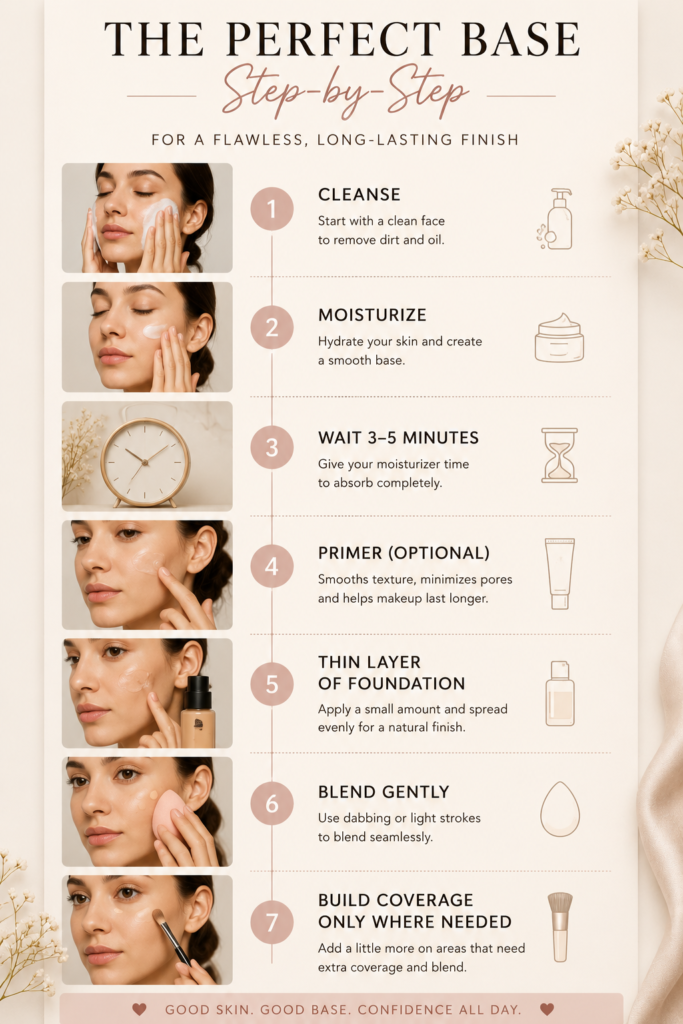
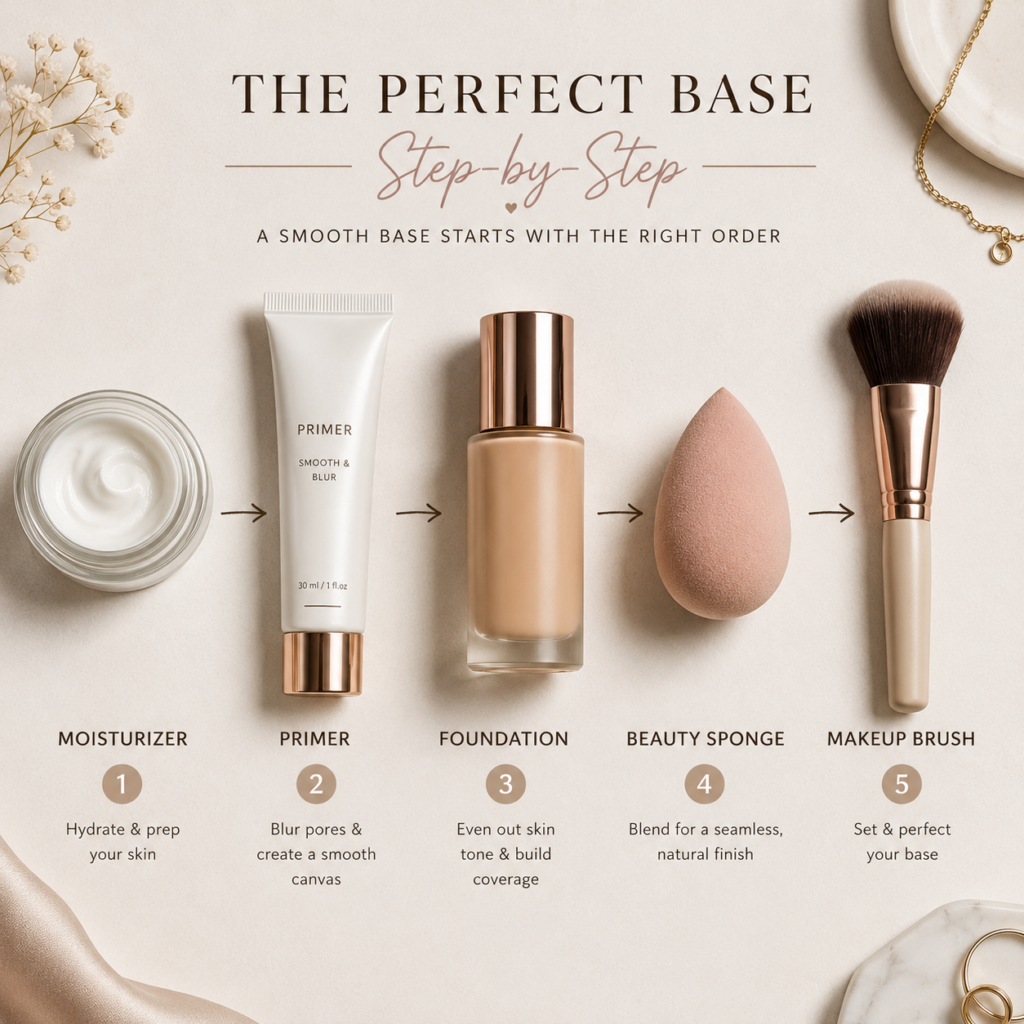
A Simple Morning Routine for Smoother Foundation
If your foundation often looks patchy, try this sequence:
- Cleanse your face.
- Apply skincare suited to your skin type.
- Wait a few minutes for it to absorb.
- Apply primer if you’re using one.
- Start with a thin layer of foundation.
- Build coverage only where needed.
- Let each layer settle before applying the next.
This routine doesn’t take much longer, but it often results in smoother, longer-lasting makeup.
Quick Checklist: How to Prevent Patchy Foundation
✔ Prepare your skin properly.
✔ Exfoliate gently as needed.
✔ Allow skincare to absorb.
✔ Apply foundation in thin layers.
✔ Avoid rubbing the product.
✔ Match your routine to your skin type.
✔ Be patient between makeup steps.
✔ Evaluate your technique before blaming your foundation.
Frequently Asked Questions
Why does my foundation look patchy around my nose?
The skin around the nose often has a combination of dryness, oil, and movement throughout the day. This makes foundation more likely to separate or cling in that area.
Can moisturizer make foundation look patchy?
Yes. Applying foundation before moisturizer has fully absorbed can prevent it from adhering evenly to the skin.
Why does my foundation look patchy even though my skin is oily?
Oily skin can still be dehydrated. Excess oil combined with dehydration often causes foundation to break apart instead of blending smoothly.
Is a beauty sponge better than a brush?
Neither is universally better. Different tools create different finishes, and the best choice depends on your preferred look and the foundation formula you’re using.
Can patchy foundation be fixed without buying new makeup?
Often, yes. Improving skin preparation, applying thinner layers, and allowing products to settle can make a noticeable difference without changing your foundation.
Why does my foundation look patchy only in certain areas of my face?
Different parts of your face produce different amounts of oil and may have varying levels of dryness or texture. That’s why your foundation may look smooth on your cheeks but become patchy around your nose, chin, or forehead.
Final Thoughts
Patchy foundation is usually a sign that something in your routine needs adjusting; not that you’re bad at applying makeup or that your foundation isn’t good enough.
The encouraging part is that most causes of patchiness are completely fixable with small changes rather than expensive purchases. Whether it’s giving your skincare more time to absorb, applying lighter layers, or adapting your routine to your skin type, these simple adjustments can have a significant impact on how your makeup looks throughout the day.
The next time your foundation looks patchy, resist the urge to blame the product immediately. In many cases, one small change is all it takes to achieve a smoother, more natural finish.